Category Archives: Support

Change Log of Support Management (Help Desk)

Database Structure

TABLE COLUMN
tickets
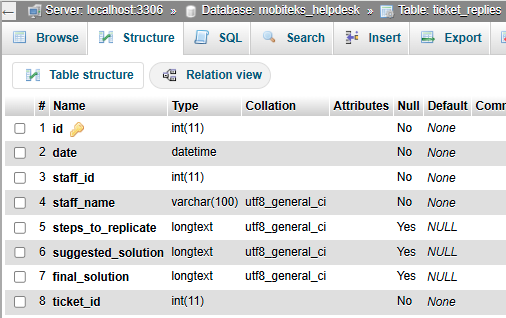
ticket_replies
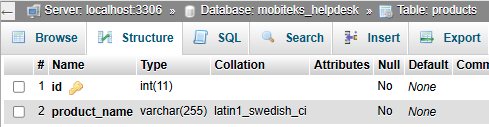
products
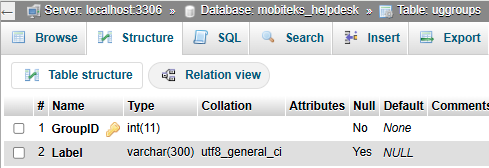
uggroups
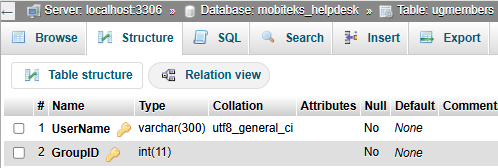
ugmembers
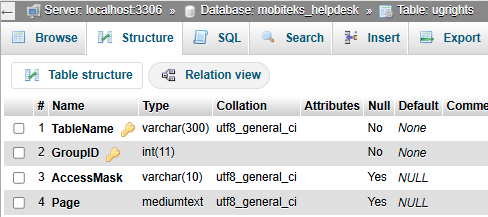
ugrights
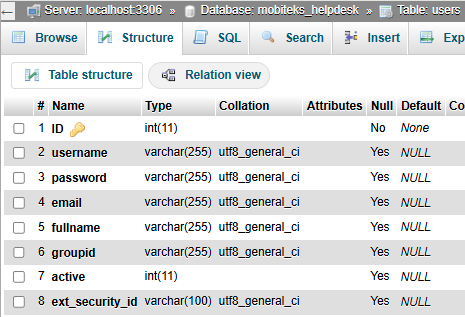
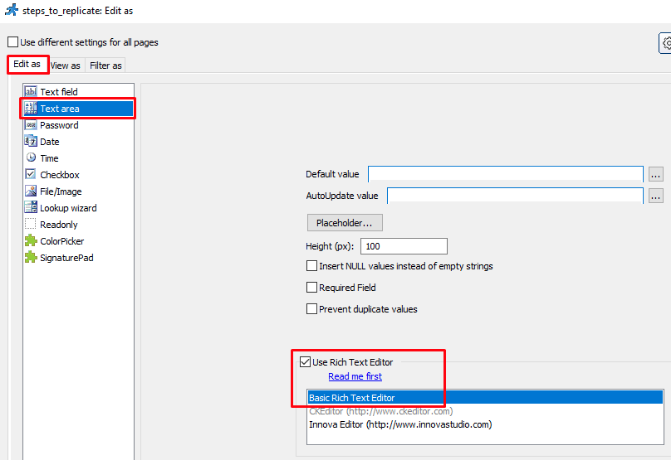
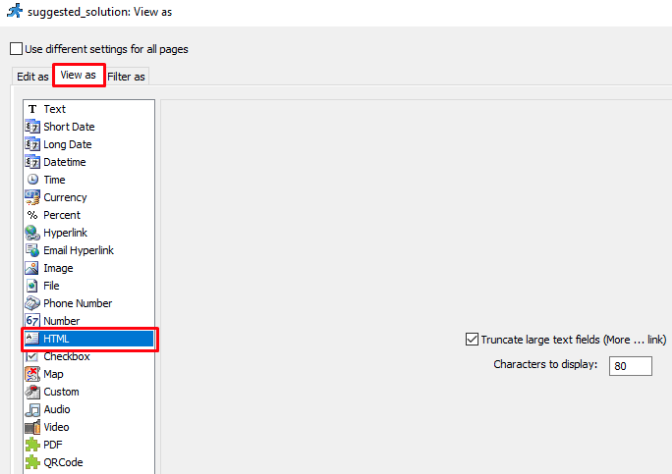
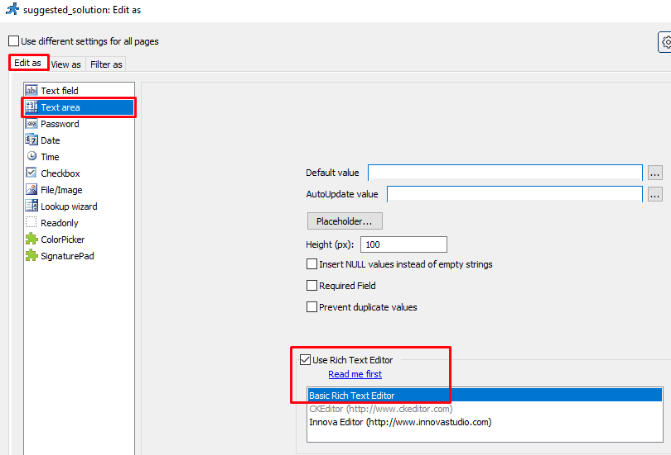
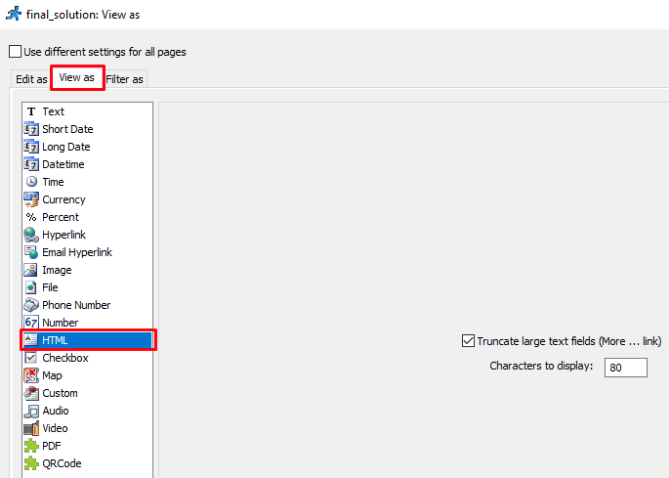
users


Live URL

https://helpdesk.mobitek.my/


v. 1.0 Kaizen Completed on 2025-11-20

Replicate the ticketing system in “https://test.mobitek-system.com/helpdeskz/staff/login”:-

  • Admin Username: mobitek-admin
  • Admin Password: 2022@A32@w

The support case management will be able to record these additional information:-

  • PROBLEM
  • STEPS TO REPLICATE THE ERROR
  • SUGGESTED  SOLUTION
  • FINAL SOLUTION


MODIFICATION in PHPRunner or cPanel or PHPMyAdmin
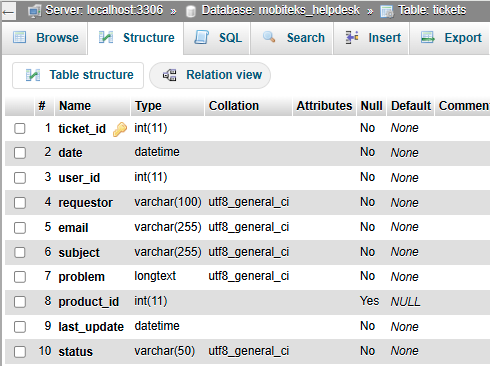
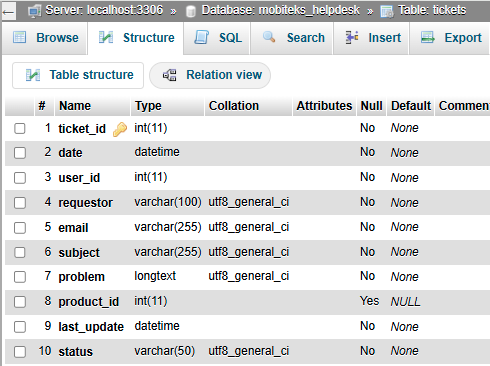
  1. In phpMyAdmin, create a new database “mobiteks_helpdesk”. Add 3 new tables:-
    • tickets
      • ticket_id – int(11)
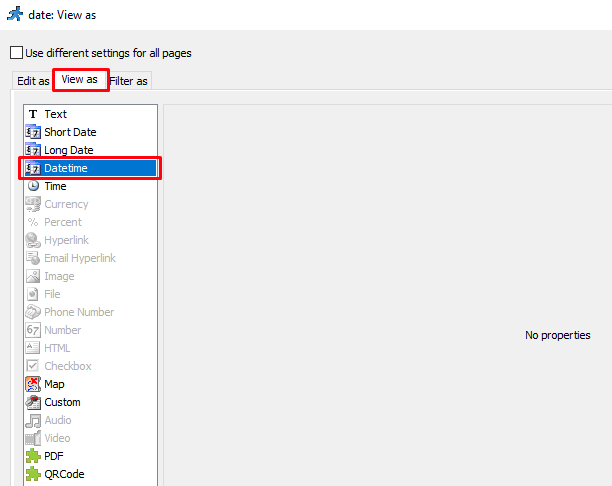
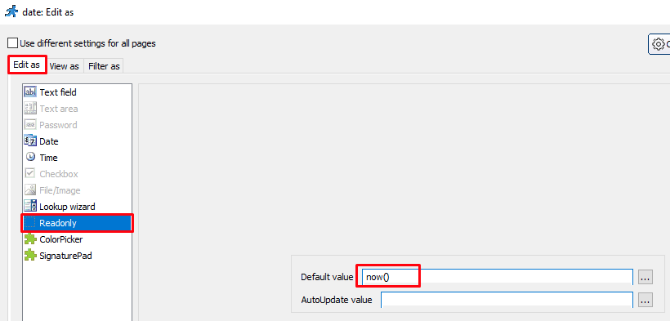
      • date – datetime
      • user_id – int(11)
      • requestor – varchar(100)
      • email – varchar(255)
      • subject – varchar(255)
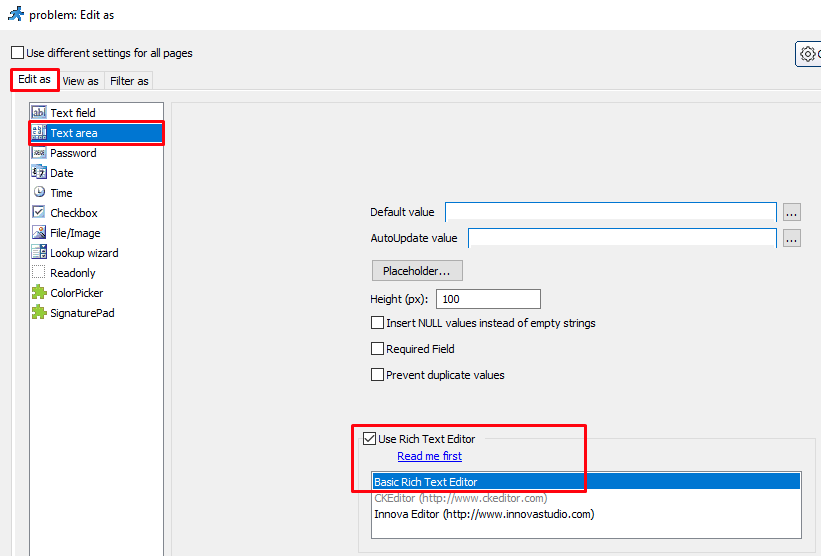
      • problem – longtext
      • product_id – id(11)
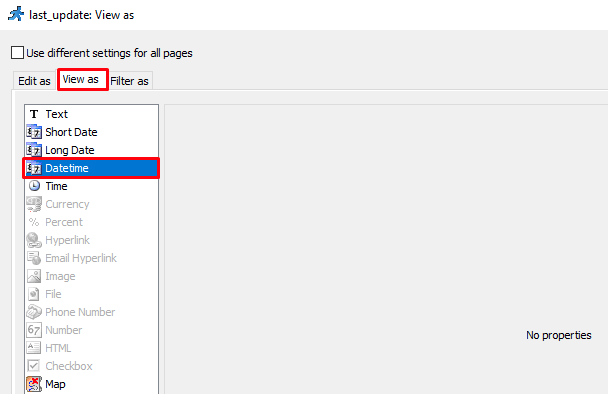
      • last_update – datetime
      • status – varchar(50)
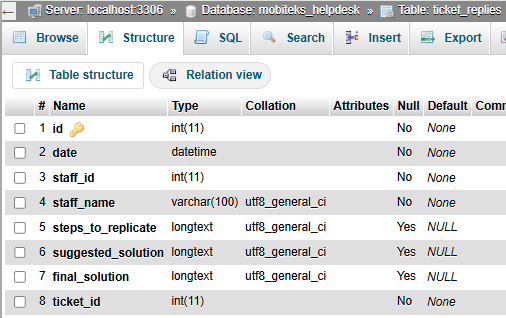
    • ticket_replies
      • id – int(11)
      • date – datetime
      • staff_id – int(11)
      • staff_name – varchar(100)
      • steps_to_replicate – longtext
      • suggested_solution – longtext
      • final_solution – longtext
      • ticket_id – int(11)
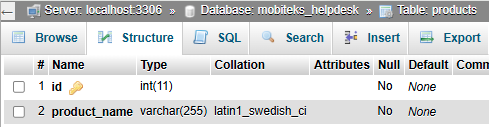
    • products
      • id – int(11)
      • product_name – varchar(255)
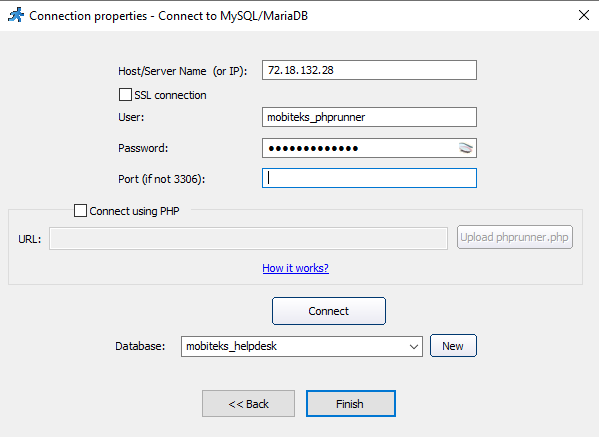
  2. Assign “mobiteks_phprunner” to “mobiteks_helpdesk” database.
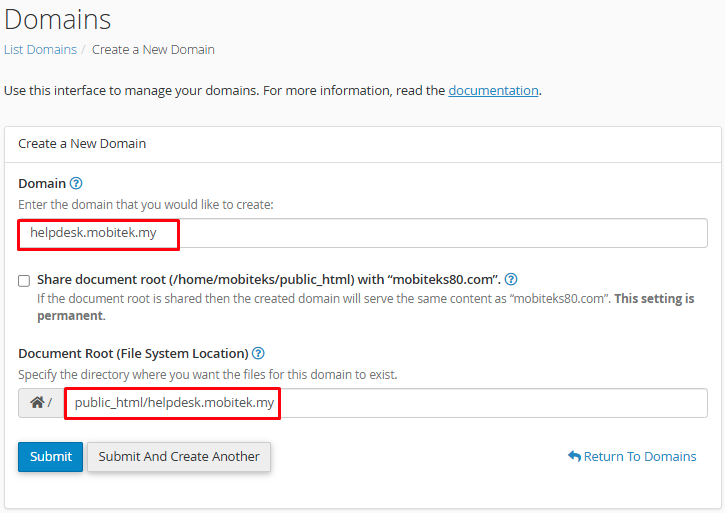
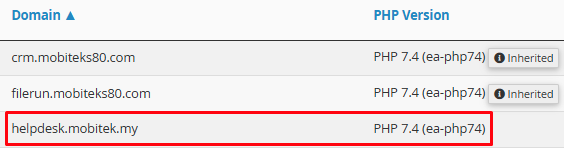
  3. Create a new domain “helpdesk.mobitek.my”.
  4. Set the PHP version for “helpdesk.sweetco.com.my” to “PHP 7.4 (ea-php74)” in “MultiPHP Manager”.
  5. Create a new project “HelpDesk” in PHPRunner and connect to “mobiteks_helpdesk” database.
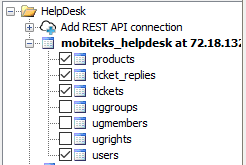
  6. In “Tables” tab, enable below tables.
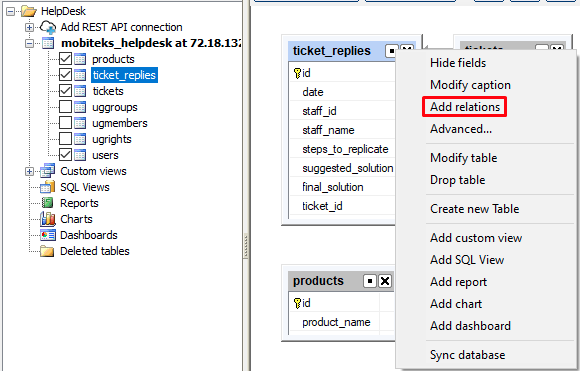
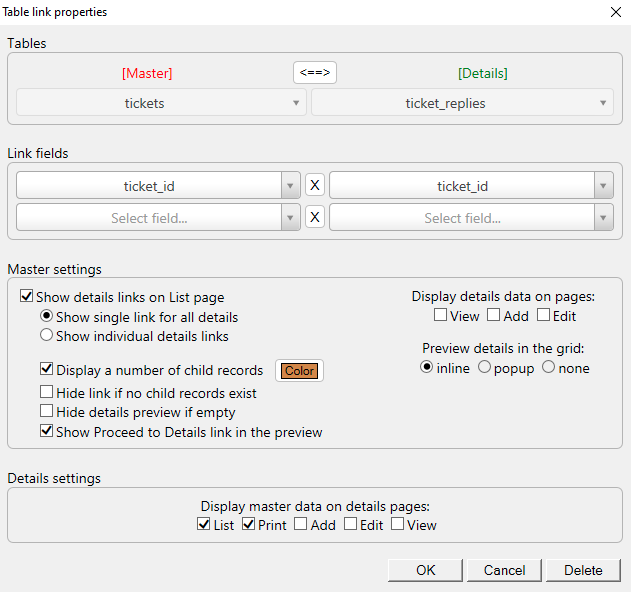
  7. Add relation between “tickets” and “ticket_replies” tables.
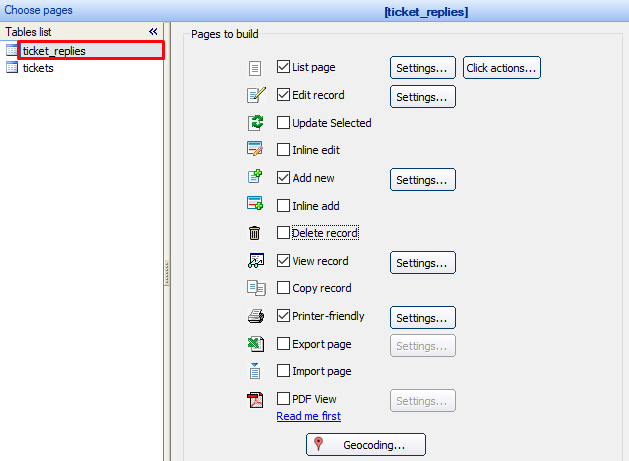
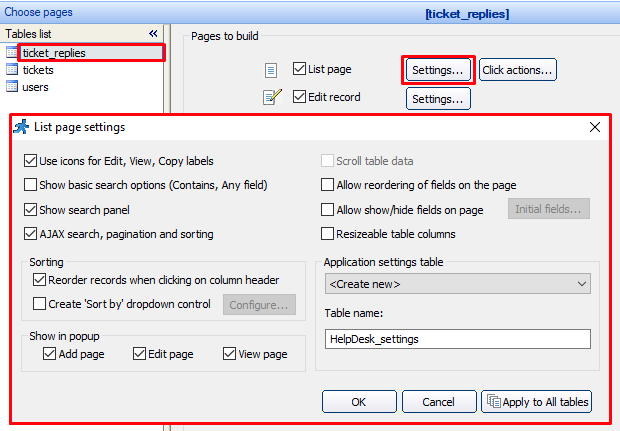
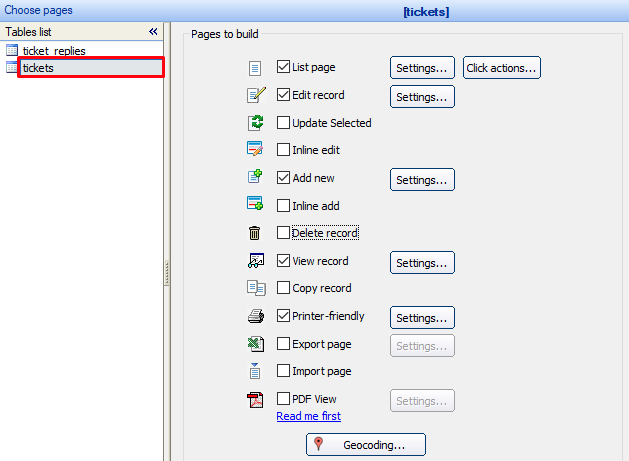
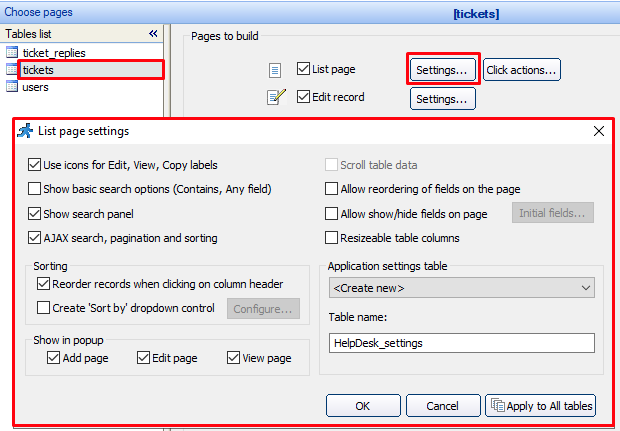
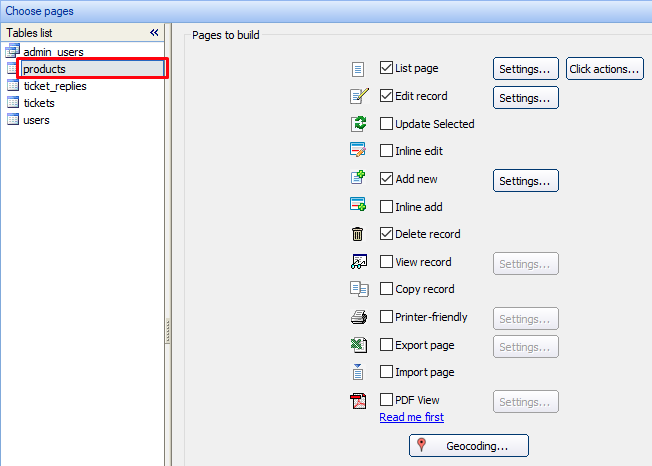
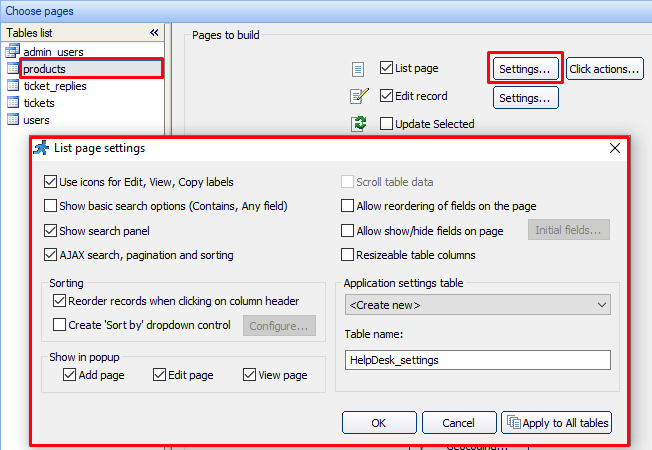
  8. In “Pages” tab, set as below:-
    • ticket_replies
    • tickets
    • products
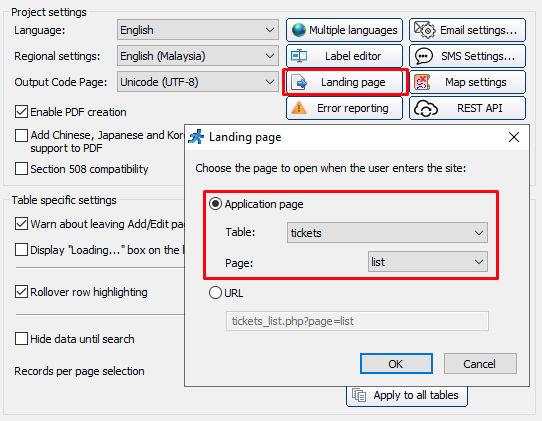
  9. In “Misc” tab, set as below:-
    • Landing page
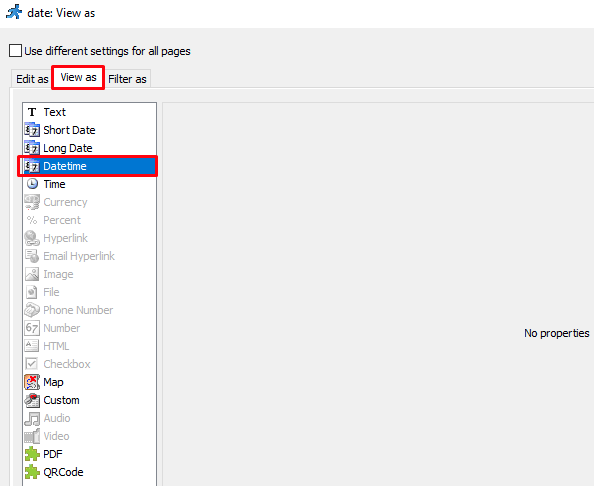
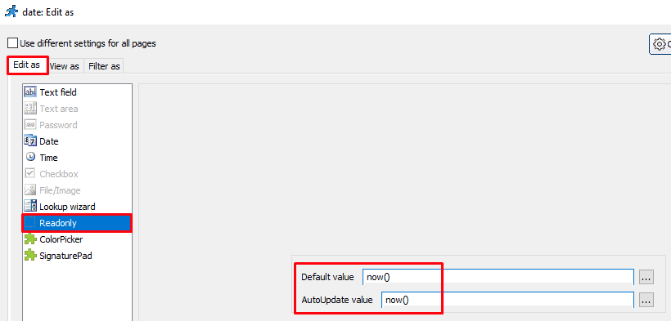
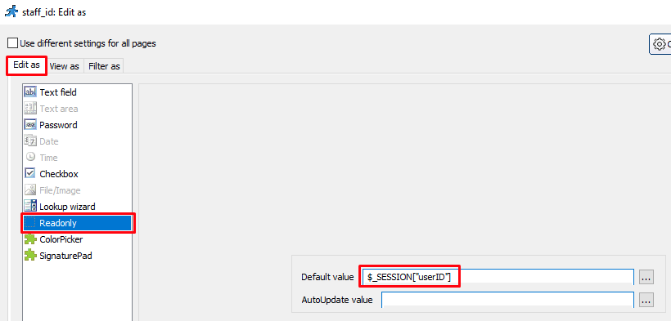
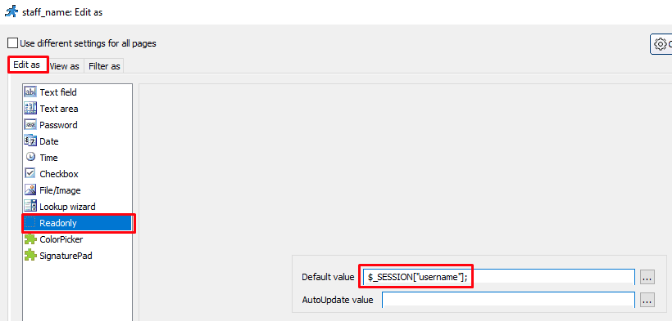
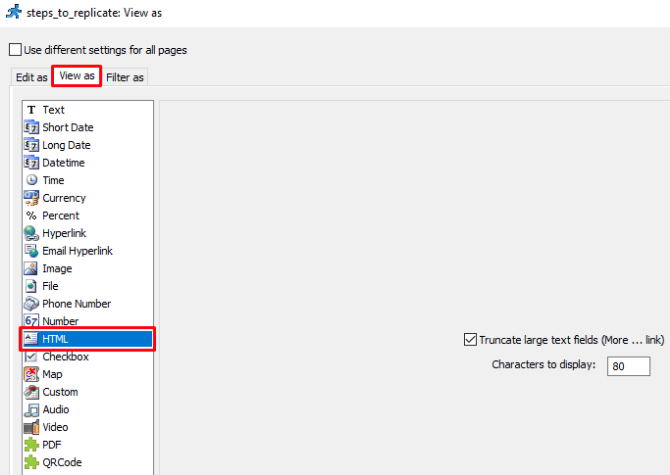
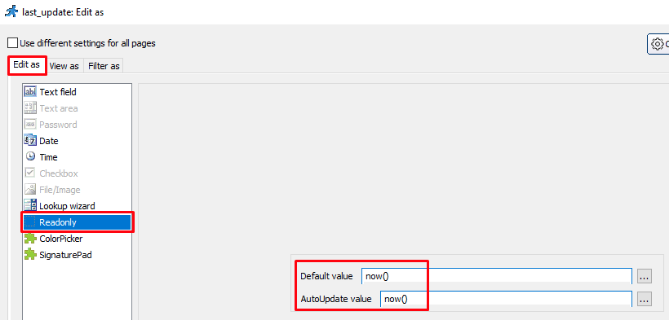
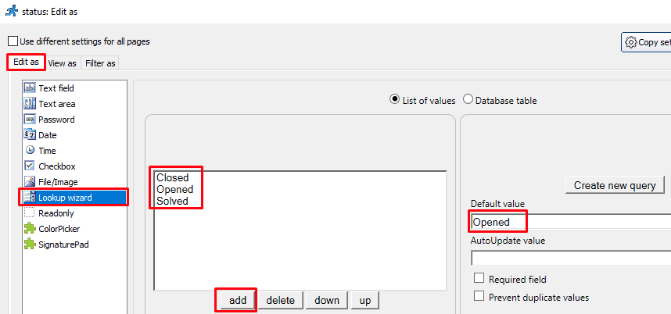
  10. In “Designer” tab, edit as below:-
    • ticket_replies
      • date
      • staff_id
      • staff_name
      • steps_to_replicate
      • suggested_solution
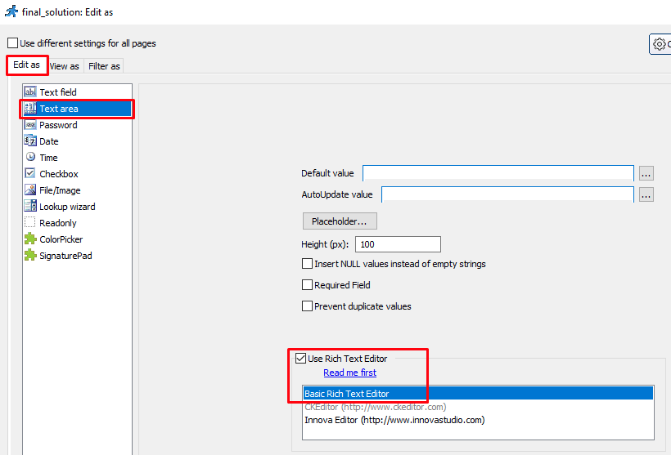
      • final_solution
    • tickets
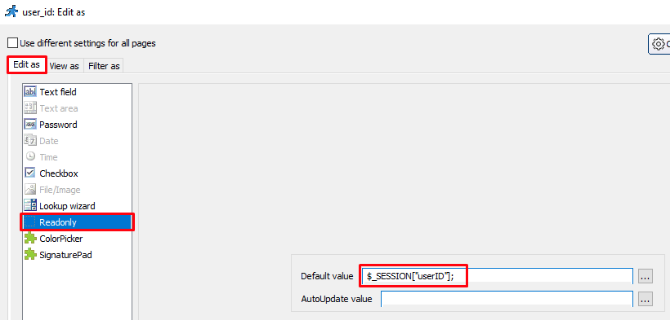
      • user_id
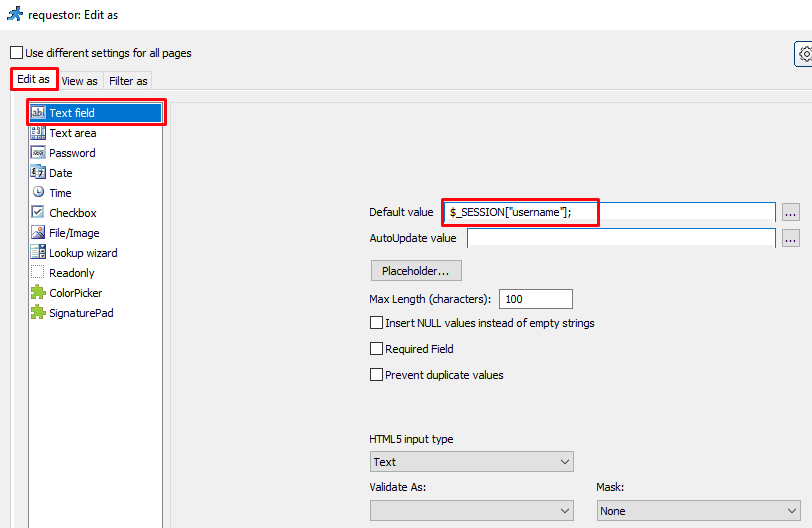
      • requestor
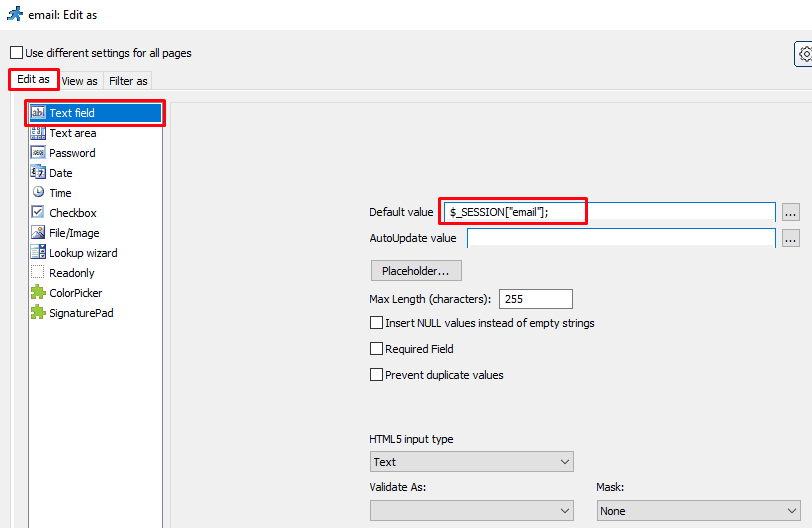
      • email
      • date
      • problem
      • last_update
      • product_id
      • status
  11. In “Events” tab, edit as below:-
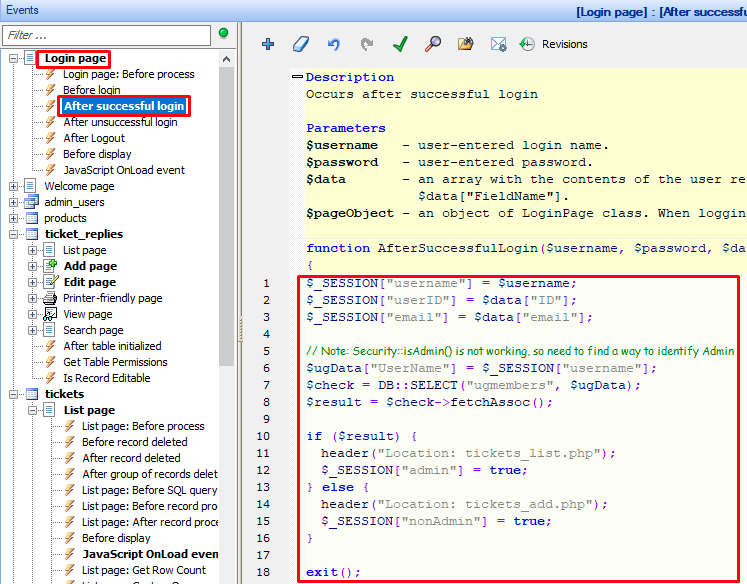
    • “Login page” -> “After successful login”

      $_SESSION["username"] = $username;
      $_SESSION["userID"] = $data["ID"];
      $_SESSION["email"] = $data["email"];
      
      // Note: Security::isAdmin() is not working, so need to find a way to identify Admin
      $ugData["UserName"] = $_SESSION["username"];
      $check = DB::SELECT("ugmembers", $ugData);
      $result = $check->fetchAssoc();
      
      if ($result) {
          header("Location: tickets_list.php");
          $_SESSION["admin"] = true;
      } else {
          header("Location: tickets_add.php");
          $_SESSION["nonAdmin"] = true;
      }
      exit();
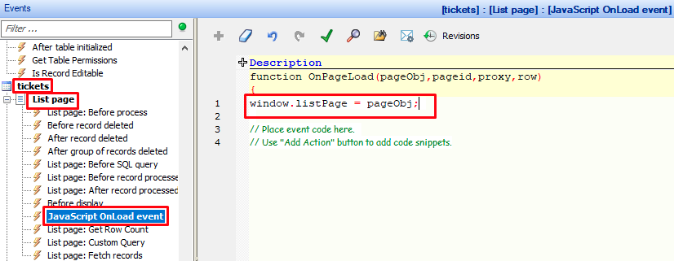
    • tickets
      • List page
        • JavaScript OnLoad event

          window.listPage = pageObj;
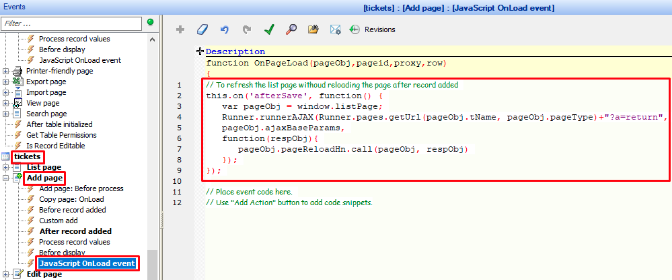
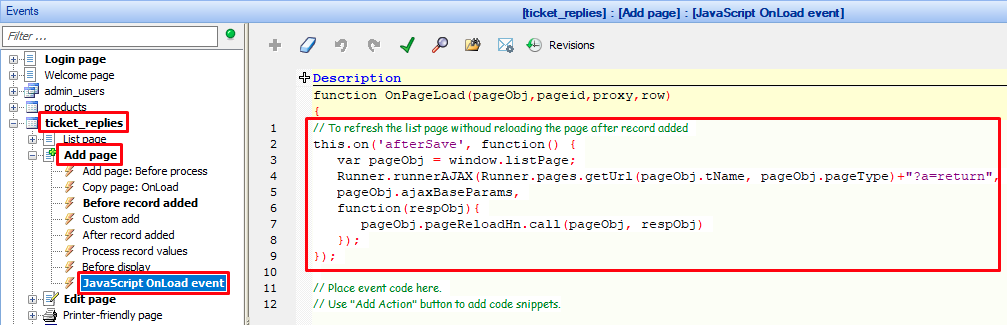
      • Add page
        • JavaScript OnLoad event

          // To refresh the list page withoud reloading the page after record added
          this.on('afterSave', function() {
              var pageObj = window.listPage;
              Runner.runnerAJAX(Runner.pages.getUrl(pageObj.tName, pageObj.pageType)+"?a=return",
              pageObj.ajaxBaseParams,
              function(respObj){
                  pageObj.pageReloadHn.call(pageObj, respObj)
              });
          });
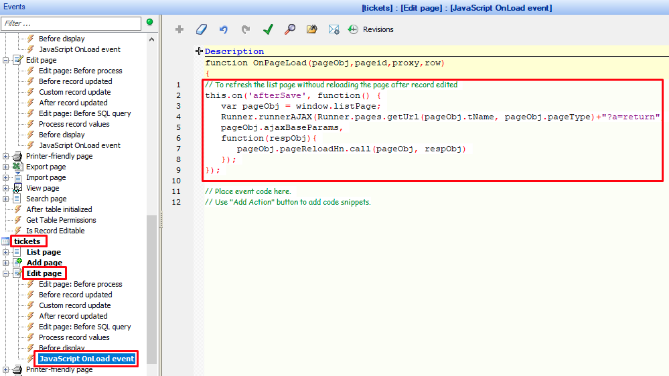
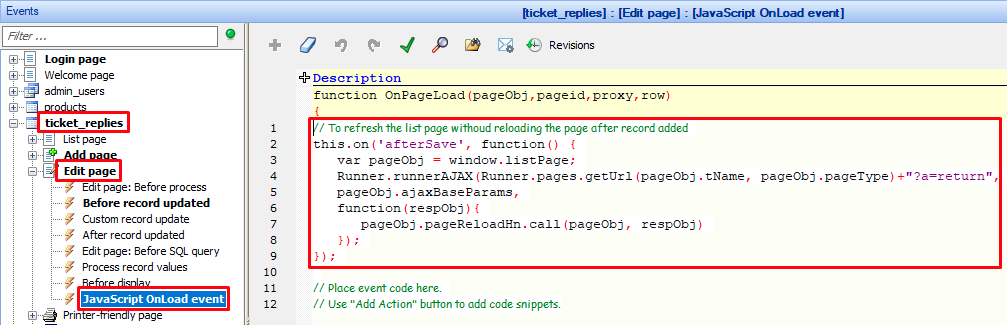
      • Edit page
        • JavaScript OnLoad event

          // To refresh the list page withoud reloading the page after record edited
          this.on('afterSave', function() {
              var pageObj = window.listPage;
              Runner.runnerAJAX(Runner.pages.getUrl(pageObj.tName, pageObj.pageType)+"?a=return",
              pageObj.ajaxBaseParams,
              function(respObj){
                  pageObj.pageReloadHn.call(pageObj, respObj)
              });
          });
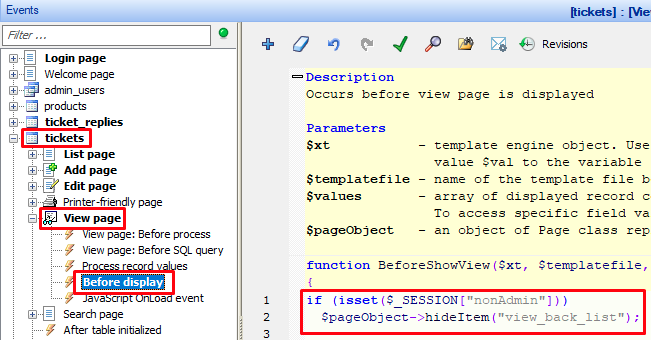
      • View page
        • Before display

          if (isset($_SESSION["nonAdmin"]))
              $pageObject->hideItem("view_back_list");
    • ticket_replies
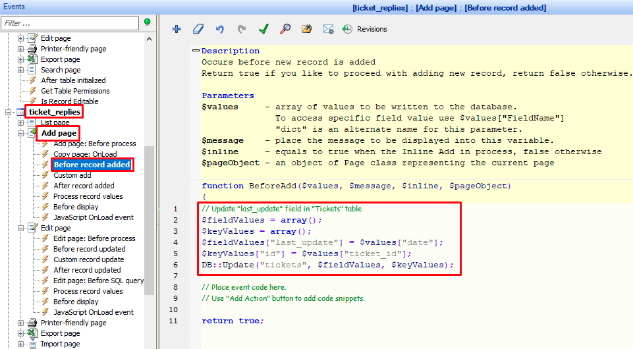
      • Add page
        • Before record added

          // Update "last_update" field in "Tickets" table
          $fieldValues = array();
          $keyValues = array();
          $fieldValues["last_update"] = $values["date"];
          $keyValues["id"] = $values["ticket_id"];
          DB::Update("tickets", $fieldValues, $keyValues);
        • JavaScript OnLoad event

          / To refresh the list page withoud reloading the page after record added
          this.on('afterSave', function() {
              var pageObj = window.listPage;
              Runner.runnerAJAX(Runner.pages.getUrl(pageObj.tName, pageObj.pageType)+"?a=return",
              pageObj.ajaxBaseParams,
              function(respObj){
                  pageObj.pageReloadHn.call(pageObj, respObj)
              });
          });
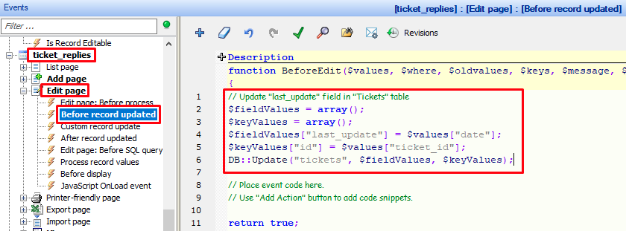
      • Edit page
        • Before record updated

          // Update "last_update" field in "Tickets" table
          $fieldValues = array();
          $keyValues = array();
          $fieldValues["last_update"] = $values["date"];
          $keyValues["id"] = $values["ticket_id"];
          DB::Update("tickets", $fieldValues, $keyValues);
        • JavaScript OnLoad event

          // To refresh the list page withoud reloading the page after record added
          this.on('afterSave', function() {
              var pageObj = window.listPage;
              Runner.runnerAJAX(Runner.pages.getUrl(pageObj.tName, pageObj.pageType)+"?a=return",
              pageObj.ajaxBaseParams,
              function(respObj){
                  pageObj.pageReloadHn.call(pageObj, respObj)
              });
          });


Add email notification to “support@mobitek.my” for each support case created.

MODIFICATION in PHPRunner or cPanel or PHPMyAdmin
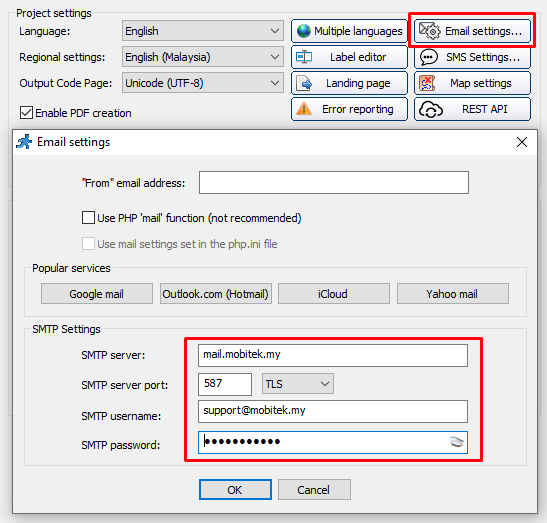
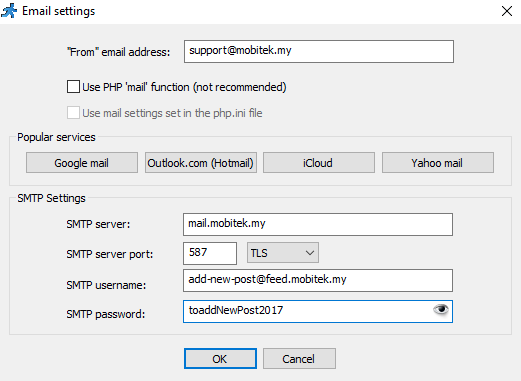
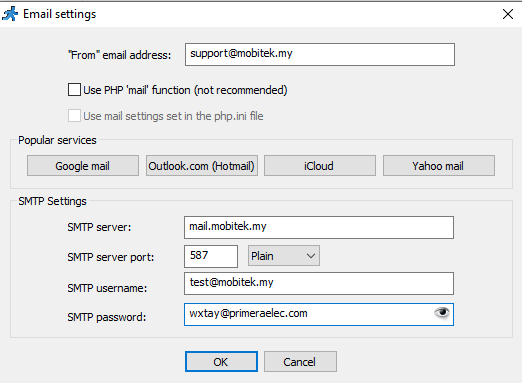
  1. Go to “Misc” tab -> “Email settings…” and set as below:-
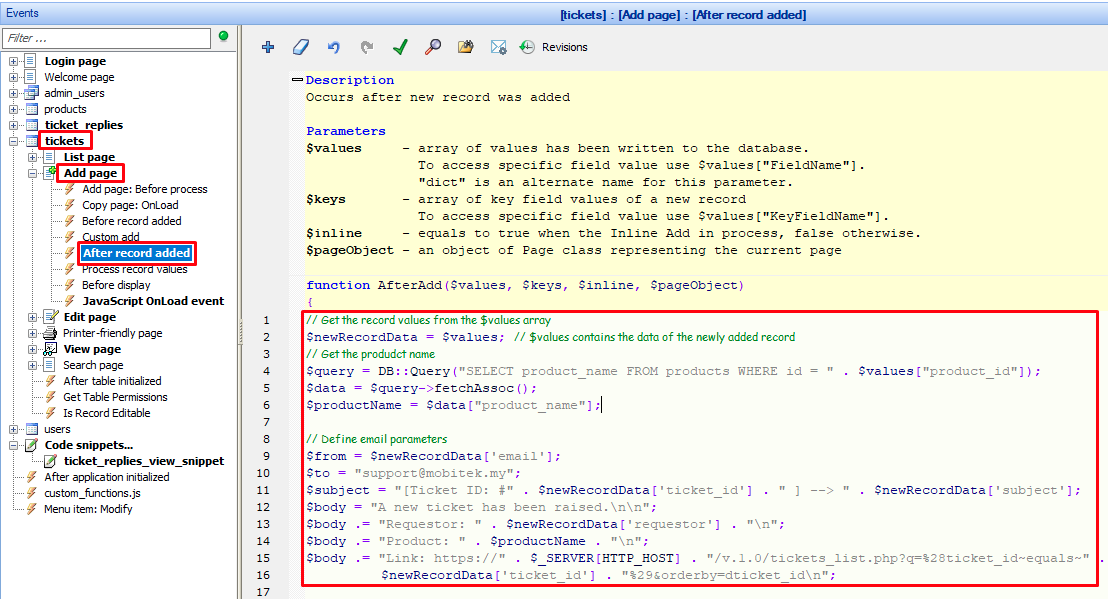
  2. Go to “Events” tab -> “tickets” -> “Add page” -> “After record added” and add below code:-

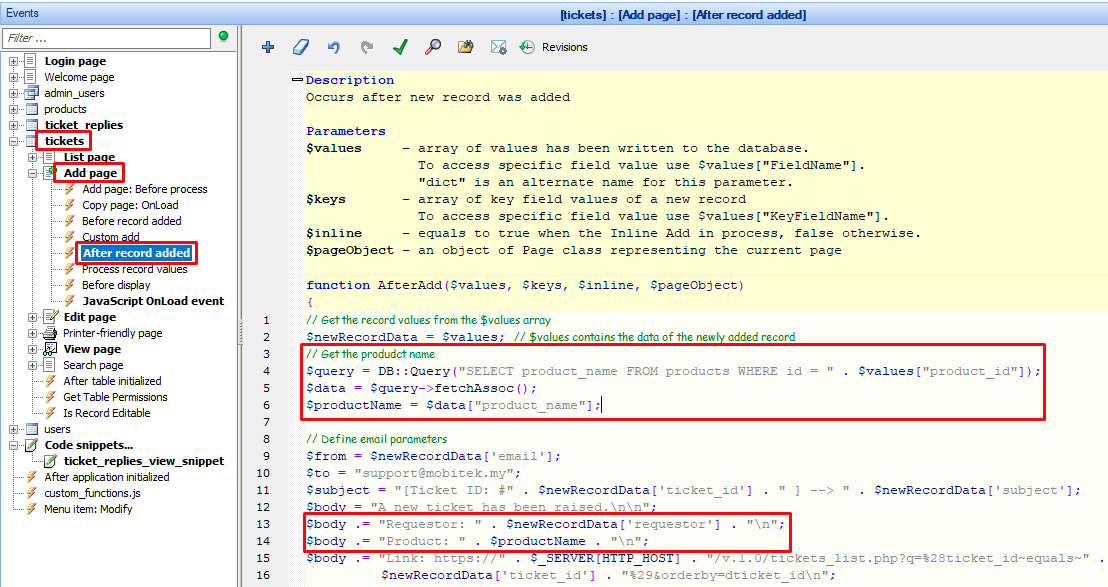
    // Get the record values from the $values array
    $newRecordData = $values; // $values contains the data of the newly added record
    // Get the produdct name
    $query = DB::Query("SELECT product_name FROM products WHERE id = " . $values["product_id"]);
    $data = $query->fetchAssoc();
    $productName = $data["product_name"];
    
    // Define email parameters
    $from = $newRecordData['email'];
    $to = "support@mobitek.my";
    $subject = "[Ticket ID: #" . $newRecordData['ticket_id'] . " ] --> " . $newRecordData['subject'];
    $body = "A new ticket has been raised.\n\n";
    $body .= "Requestor: " . $newRecordData['requestor'] . "\n";
    $body .= "Product: " . $productName . "\n";
    $body .= "Link: https://" . $_SERVER[HTTP_HOST] . "/v.1.0/tickets_list.php?q=%28ticket_id~equals~" .
                        $newRecordData['ticket_id'] . "%29&orderby=dticket_id\n";
    
    // Send the email
    $ret = runner_mail(array(
            'from' => $from,
        'to' => $to,
        'subject' => $subject,
        'body' => $body
    ));
    
    // Optional: Display an error message if the email failed to send
    if (!$ret["mailed"]) {
        echo $ret["message"];
    }
    
    // Redirect to view page if not logged in using "Big-Boss"
    if (isset($_SESSION["nonAdmin"])) {
        header("Location: tickets_view.php");
        exit();
    }


Implement “Database” Security Method.

MODIFICATION in PHPRunner or cPanel or PHPMyAdmin
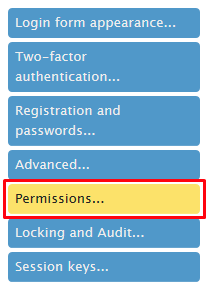
  1. Go to “Security” tab:-
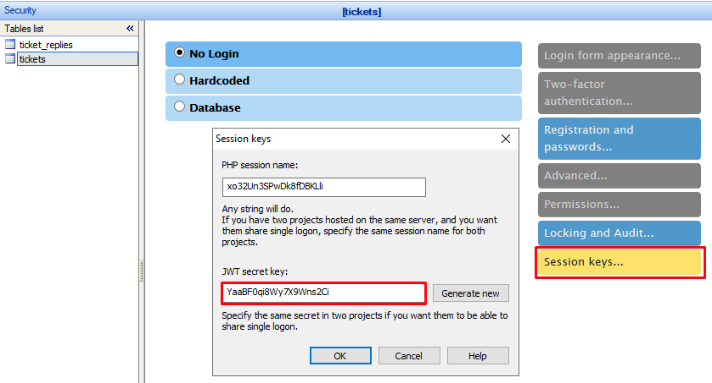
    • set the “JWT secret key” in “Session keys…” to “YaaBF0qi8Wy7X9Wns2Ci” to match the key in “SSO”.
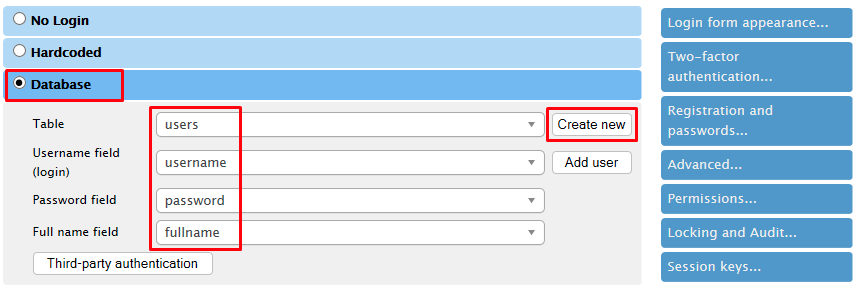
    • use “Database” to store login information
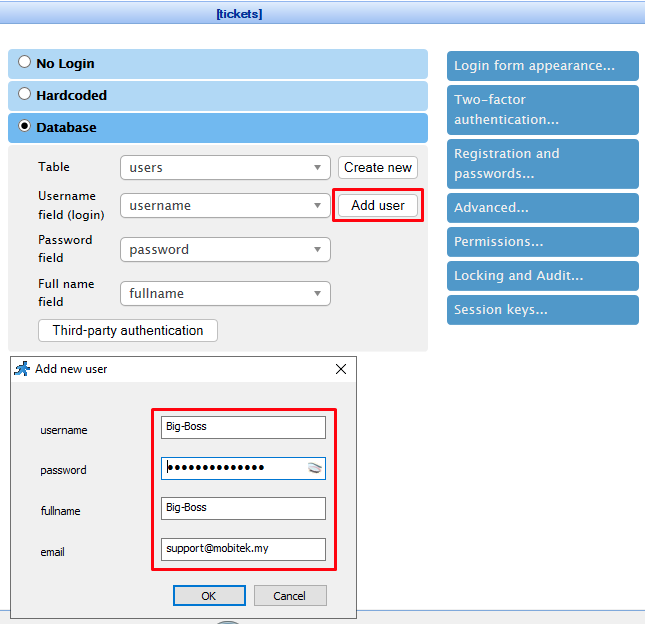
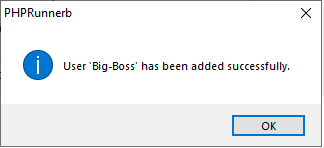
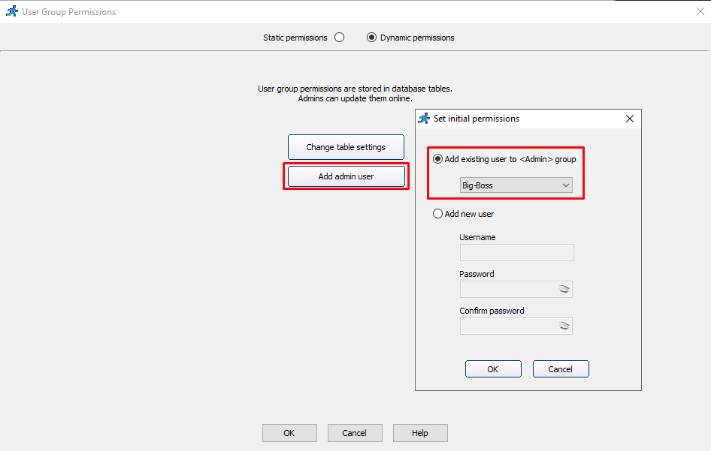
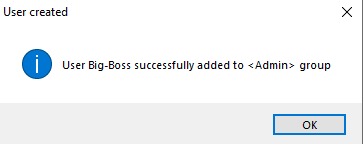
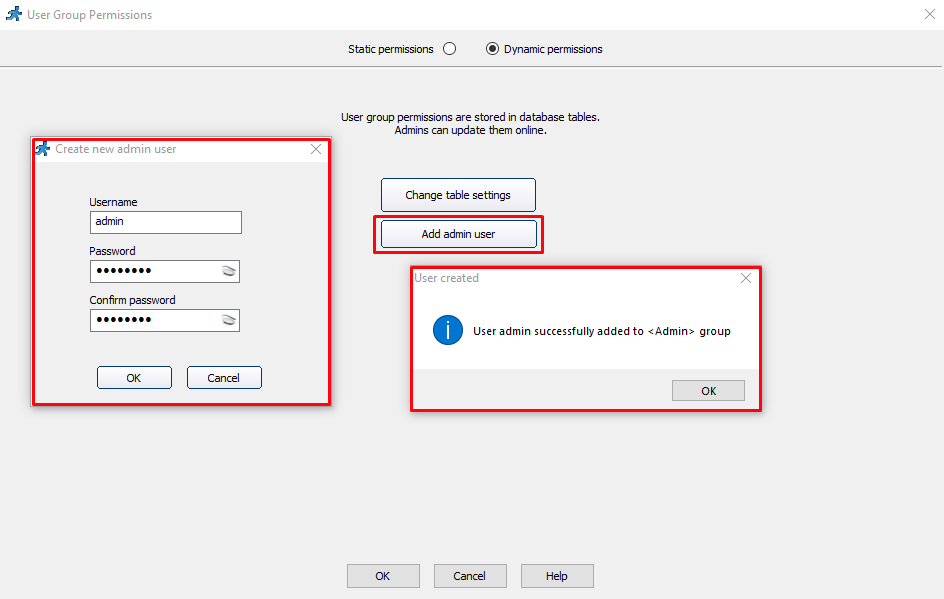
    • add a new user “Big-Boss”.
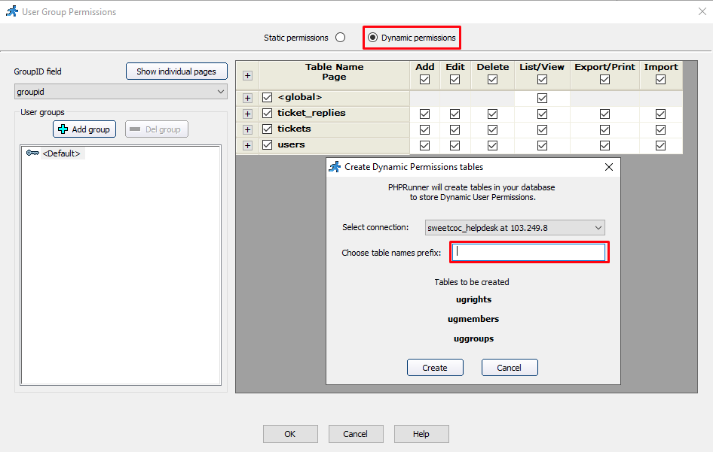
    • set “Dynamic Permissions”.

    • build and upload the project. Login using the “Big-Boss” account.
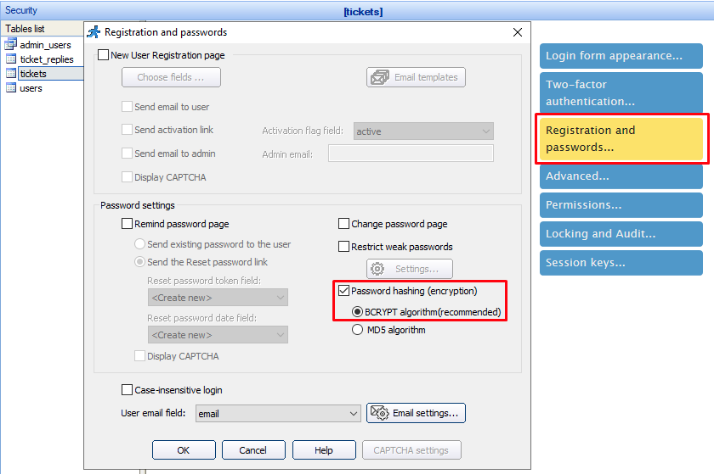
    • go back to the project, use the encryption for password.
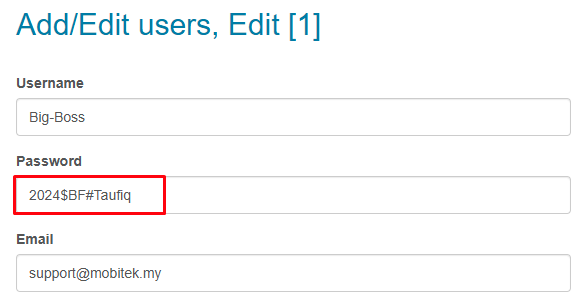
    • build and upload the project again and change the password for “Big-Boss”.


Set permission to all users.

MODIFICATION in PHPRunner or cPanel or PHPMyAdmin

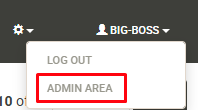
  1. Log in  to “helpdesk.mobitek.my” as “Big-Boss”.
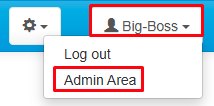
  2. Go to “Admin Area”.
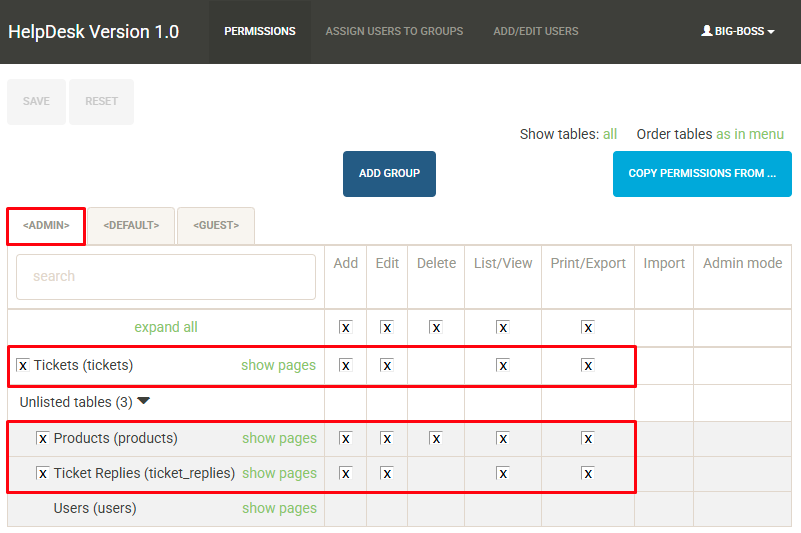
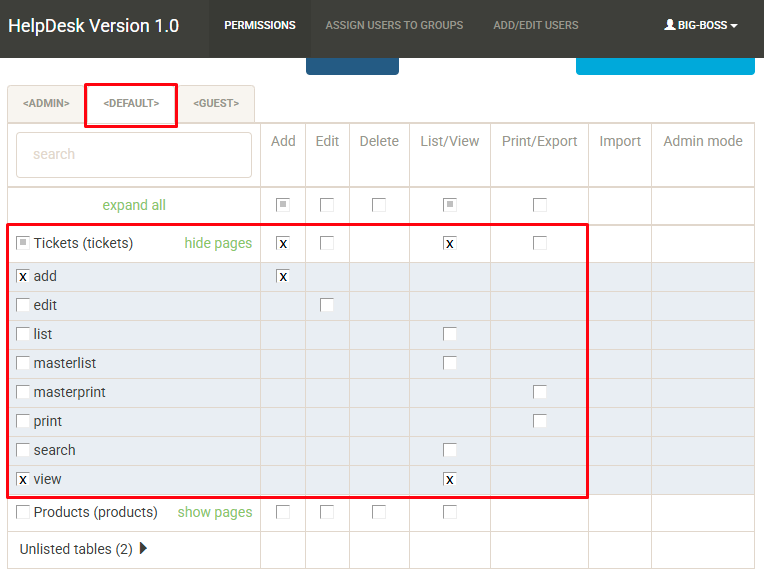
  3. Set the permission for all groups as below:-
    • <Admin>
    • <Default>


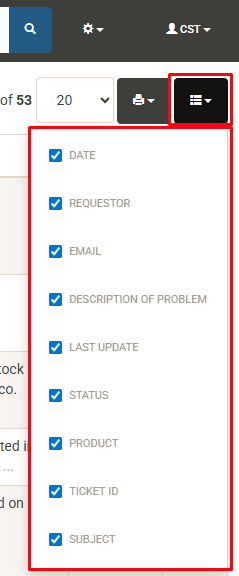
Add “Show/hide columns” button.

BEFORE AFTER

MODIFICATION in PHPRunner or cPanel or PHPMyAdmin
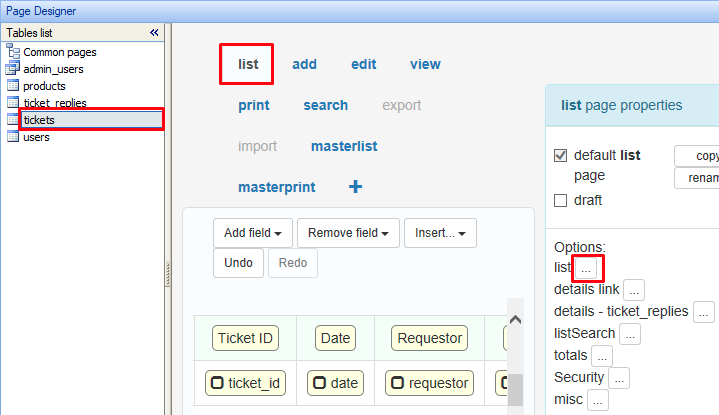
  1. Go to”Designer” tab, select “tickets” in Tables list and click on “list” tab. Under the “Options” section, click on the button next to the “list”.
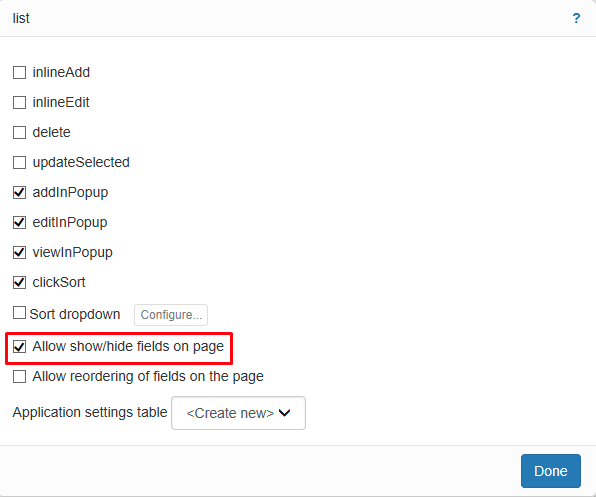
  2. Check “Allow show/hide fields on page”.


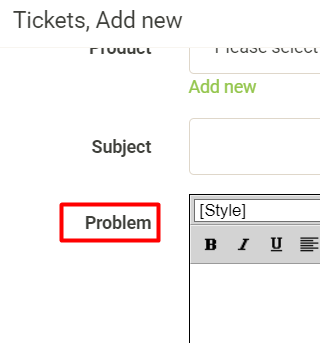
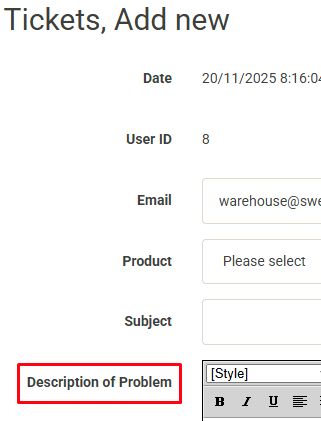
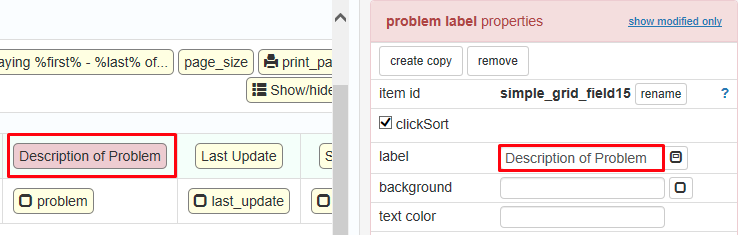
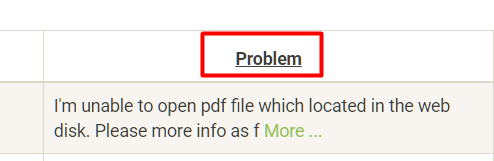
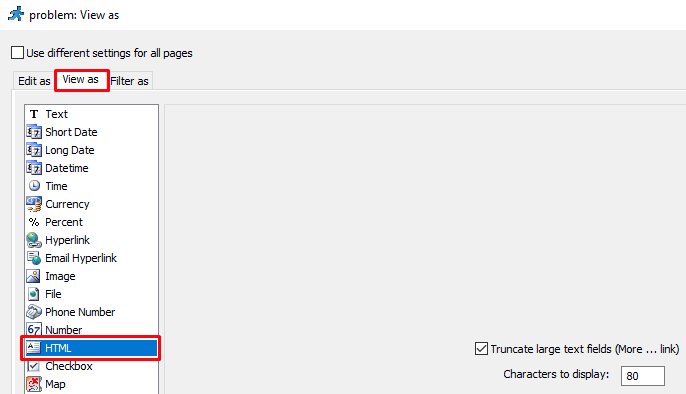
Rename “Problem” to “Description of Problem” in the UI (there is no need to rename it in database).

BEFORE AFTER

MODIFICATION in PHPRunner or cPanel or PHPMyAdmin

  1. Go to “Designer” tab, select “tickets” in Tables list, click on “Problem” label and rename it to “Description of Problem”.


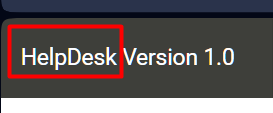
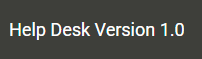
Rename “HelpDesk” to “Help Desk”.

BEFORE AFTER

MODIFICATION in PHPRunner or cPanel or PHPMyAdmin
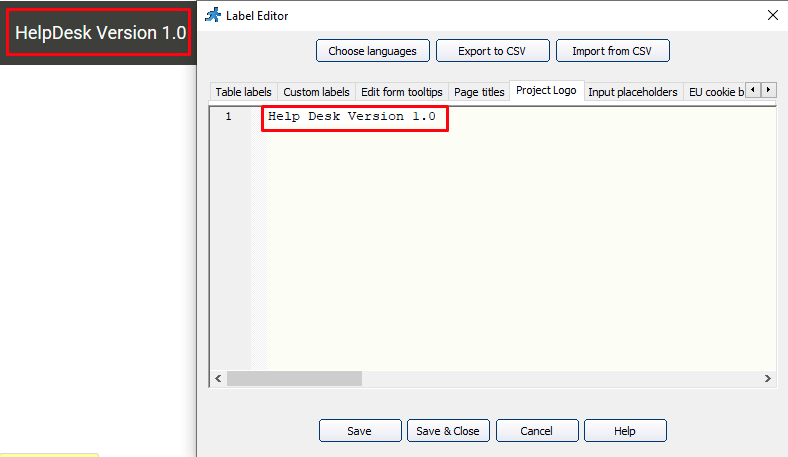
  1. Go to “Editor” tab, double-click on “HelpDesk Version 1.0” logo and rename it to “Help Desk Version 1.0”.


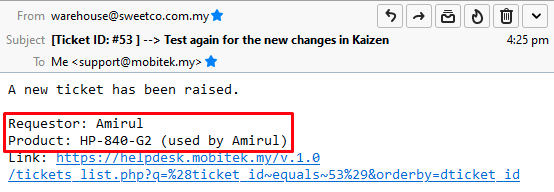
Add these information (column) into the message body of e-mail notification:-

  • Product
  • Requestor
BEFORE AFTER

MODIFICATION in PHPRunner or cPanel or PHPMyAdmin
  1. Go to “Events” tab, click on “tickets” -> “Add page” -> “After record added” and add code as below:-


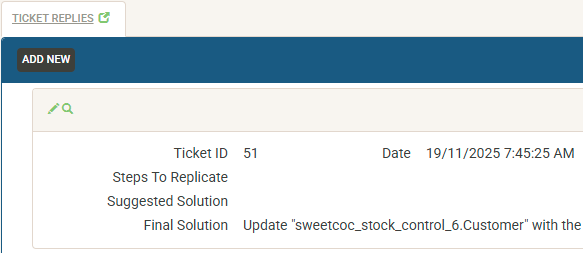
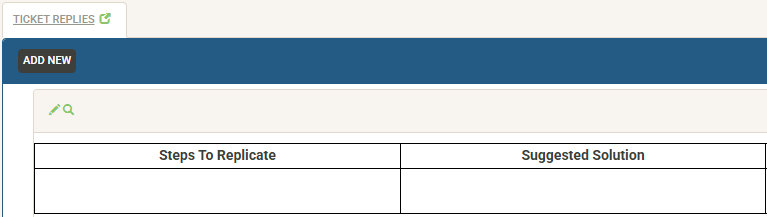
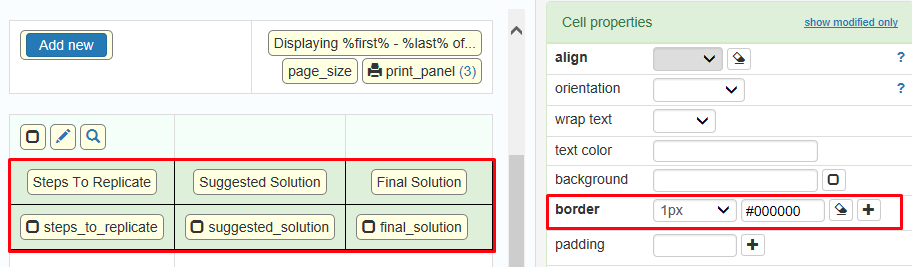
Add border for the “ticket_replies” list page.

BEFORE AFTER

MODIFICATION in PHPRunner or cPanel or PHPMyAdmin
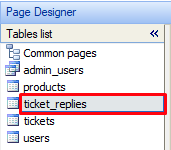
  1. Go to “Designer” tab and select “ticket_replies” in the Tables list.
  2. Select all cells in “ticket_replies” grid and set the border to black 1px.


v. 1.0 Beta Testing Completed on 2025-11-20

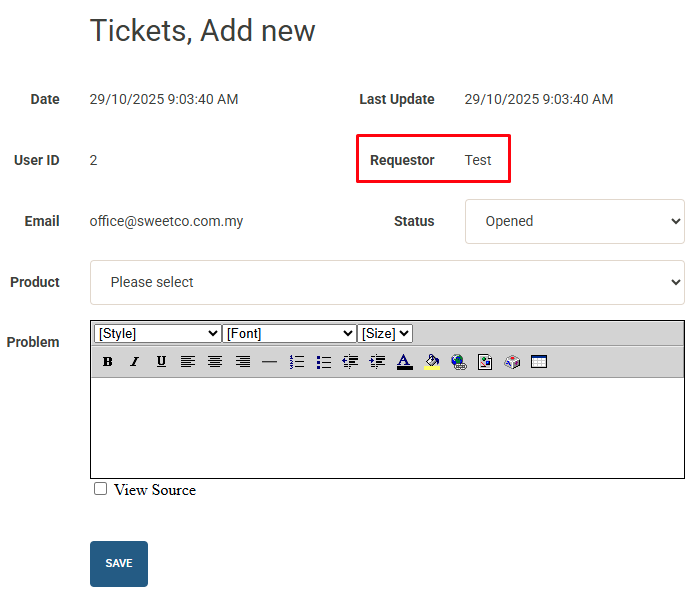
TEST OBJECTIVE: Does other users except “Big-Boss” can only see the ticket’s add page and not the ticket’s list page?

TESTING METHODOLOGY TEST RESULT
  1. Log in to “helpdesk.mobitek.my” as:-
    • Username = Test
    • Password = test
  2. The page should redirected to “Tickets” -> “Add new” page.
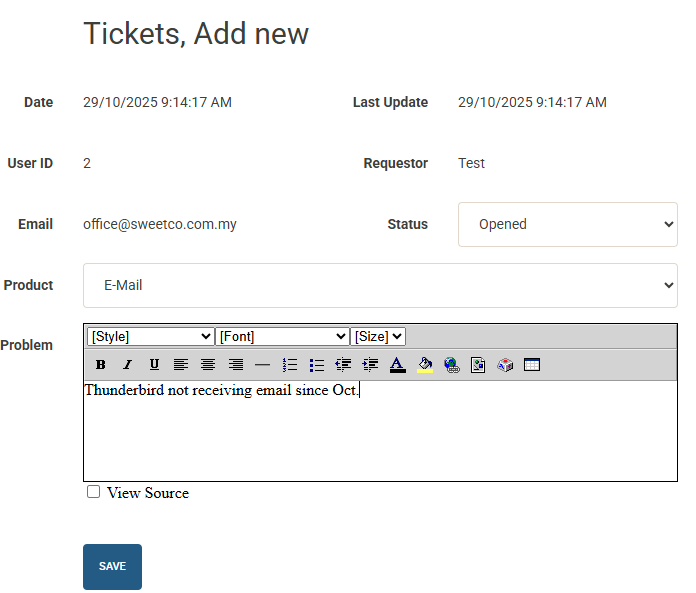
  3. Enter the ticket details and click “Save”.
  4. The page will redirected to the “Tickets” -> “View” page.
Page redirected to “https://helpdesk.mobitek.my/v.1.0/tickets_add.php” after logged in


The page redirected to “https://helpdesk.mobitek.my/v.1.0/tickets_view.php” after the ticket has been added


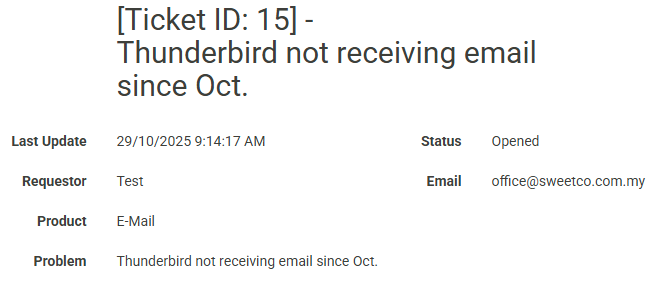
TEST OBJECTIVE: Does an email send to “support@mobitek.my” for each new ticket created?

TESTING METHODOLOGY TEST RESULT
  1. Add a new ticket.
  2. Fill up all details and click “Save”.
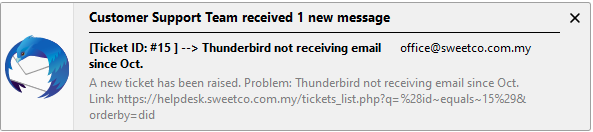
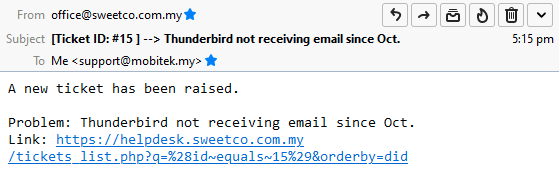
  3. A new email should be sent to “support@mobitek.my”.


How To Automatically Run MySQL Dump in Windows and Linux to Backup MySQL Database

Windows

  1. Create a batch file “sweetcoc_ams_backup.bat” for mysqldump. Copy below code into the batch file:-
    @echo off
    REM set mysqldump path
    SET mysqldump_path="C:\wamp64\bin\mysql\mysql5.7.26\bin\mysqldump.exe"
    REM credentials to connect to MySQL server
    SET mysql_user=root
    SET mysql_password=
    REM backup storage location
    SET backup_folder="C:\wamp64\www\database_backups"
    REM backup file name
    SET backup_name=%backup_folder%\sweetcoc_ams_%DATE:~-4%-%DATE:~7,2%-%DATE:~4,2%.sql
    REM create backup
    "C:\wamp64\bin\mysql\mysql5.7.26\bin\mysqldump.exe" -u %mysql_user%
    sweetcoc_ams > %backup_name%
  2. Create a new Task Scheduler that executes the batch file.


Linux

  1. Create a new PHP file and copy below code into it.
    <?php
    
    ini_set('display_errors', 1);
    ini_set('display_startup_errors', 1);
    error_reporting(E_ALL);
    
    $database = '*****';
    $user = '*****';
    $pass = '*****';
    $host = '*****';
    //$dir = dirname(__FILE__) . '/dump.sql';
    $dir = dirname(__FILE__);
    
    echo "Backing up database to {$dir}.";
    echo "\n";
    
    exec("mysqldump --user={$user} --password={$pass} --host={$host} --no-tablespaces {$database} | zip > \${HOME}/database_backup/{$database}_`date '+%Y-%m-%d_%H:%M'`.sql.zip", $output);
    
    echo "\n";
    echo "Backup completed.";
    
    ?>
  2. Create a new Cron Job and point to the path where the PHP file is saved.
    /usr/local/bin/php
    /home4/sweetcoc/database_backup/mysqldump.php
  3. The Cron Job will save the database as below:-


Restoring a Back-Up Database

  1. Go to “D:\” drive in UBS-SERVER.
  2. Compress “AMS Back-Up” folder to “AMS Back-Up.zip”.
  3. Copy “AMS Back-Up.zip” into “C:\wamp64\www\” folder in HP-6305-W7PRO and extract it.
  4. After extracted, move all folders inside “AMS Back-Up” folder to the root folder of “C:\wamp64\www\”. The folder hierarchy should be as below:-
  5. Go to “Start”, search for “wampserver” and run “Wampserver64”.
  6. Wait and ensure the icon is green in “System Tray” that indicates all services are running.
  7. If not then click on “Wampserver64” icon and select “Restart All Services”.
  8. Click on Windows “System Tray” dropdown -> click “Wamserver64” icon -> click “phpMyAdmin”. “phpMyAdmin” will be opened on the browser.
  9. Enter the “username = root” and leave the password empty. Click “Go”.
  10. Click on “sweetcoc_ams” database -> click “Import”.
  11. Click “Choose file”.
  12. Browse “C:\wamp64\www\database_backups”, sort the files by “Date modified” and open the latest SQL file.
  13. Leave everything as it is and click “Go”.
  14. Go to browser and open “http://localhost/punchcard”.
  15. Finally HP-6305-W7PRO” will have the latest version of “E-Punch Card” and “sweetcoc_ams” database.

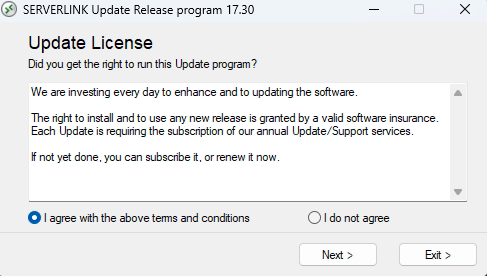
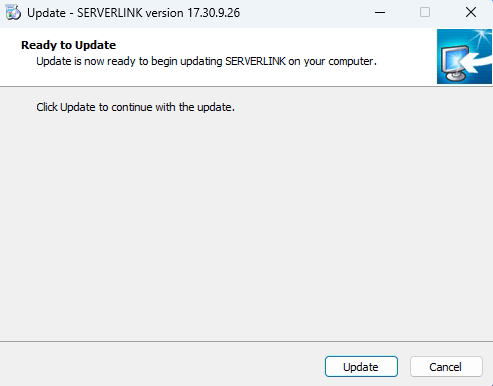
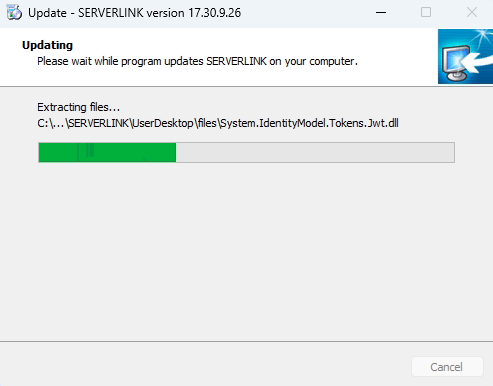
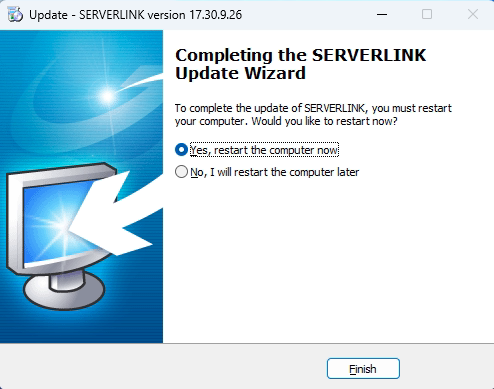
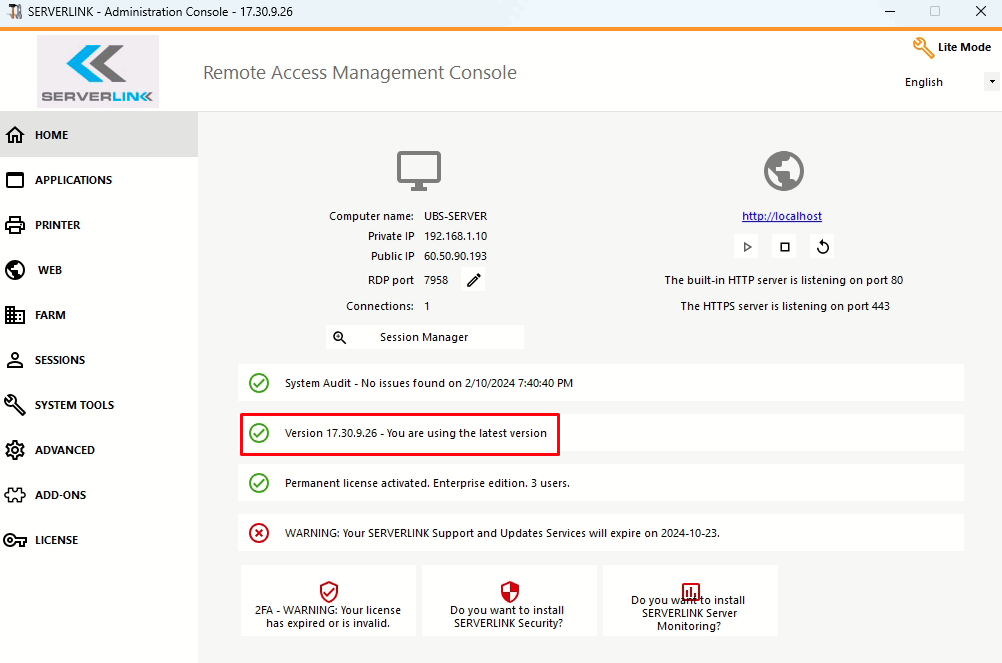
How to Upgrade SERVERLINK

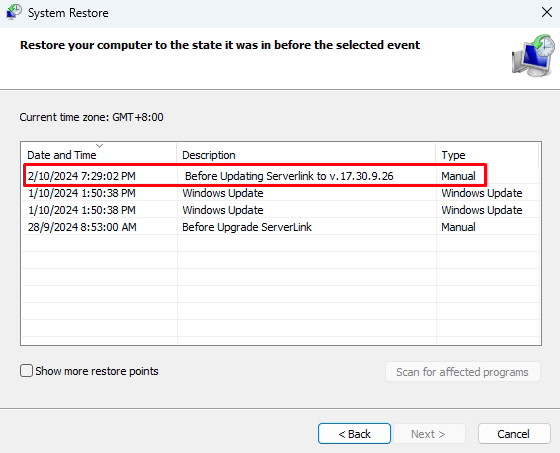
  1. Firstly, create a restore point.
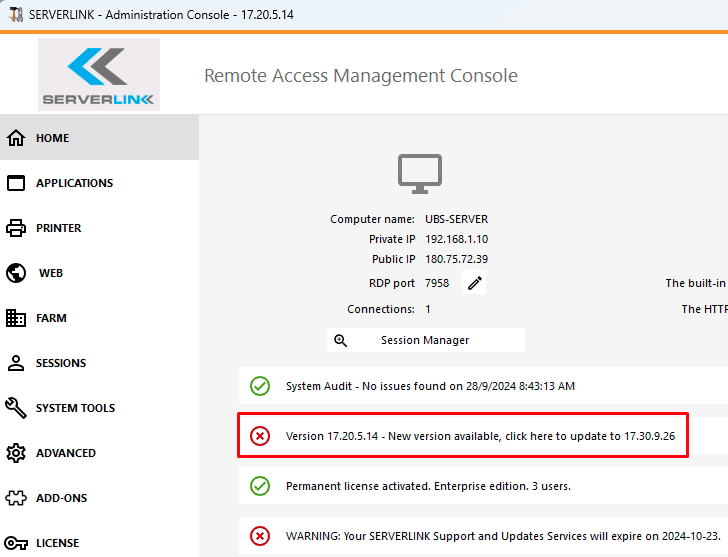
  2. Open SERVERLINK, in “HOME”, click on the update.
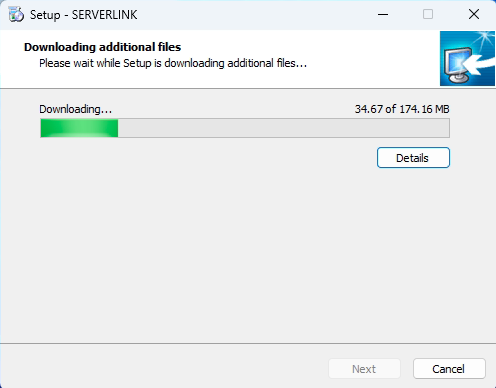
  3. Let SERVERLINK download the update.
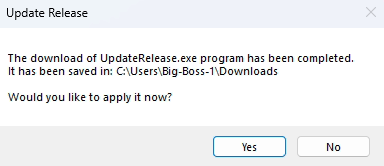
  4. After the download has been completed, a popup will appear. Click “Yes”.
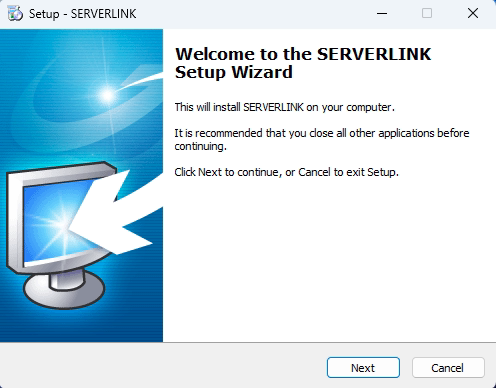
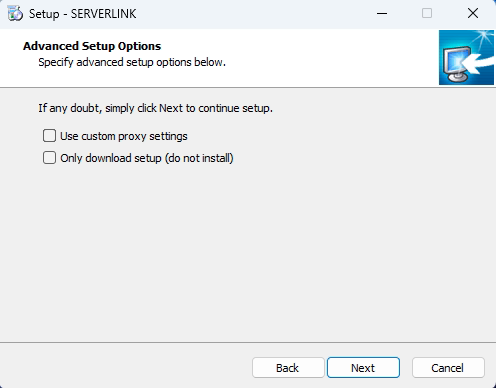
  5. Click “Next” on each Setup.

    Note: if you choose “Only dowload setup (do not install)” , then the setup file is downloaded into this folder “C:\Users\…\AppData\Local\Temp\UpdateRelease.exe“. Run the “UpdateRelease.exe” at a later date.

  6. Restart UBS-SERVER.
  7. Finally, check the version displayed is the latest version (s.c.).

Comparison of E-mail API used in PHP

Runner_Mail() PHPMailer() PHP Mail()
SMTP, user name, password, port, etc. are set inside the PHPRunner UI

PHPMailer() is called by Runner_Mail()

SMTP is set inside the PHP code itself

SMTP is set in “PHP.ini”
<?php

require_once(“include/dbcommon.php”);


$email = “t1@mobitek.my”;

$msg = “”;

$subject = “New data record”;


$msg.= “Message: [Message]\r\n”;

$msg.= “Recipient: Recipient\r\n”;

$msg.= “Date/Time: DateTimeQueue\r\n”;

runner_mail(array(‘to’ => ‘$email’, ‘subject’ => $subject, ‘body’ => $msg));

?>

<?php
include_once(‘libs/phpmailer/class.phpmailer.php’);
include_once(‘libs/phpmailer/class.smtp.php’);$mail = new PHPMailer( true );
// Mail settings
$mail->isSMTP();   //Send using SMTP
$mail->Host = ‘mail.sweetco.com.my’;   //Set the SMTP server to send through
$mail->SMTPAuth = true;   //Enable SMTP authentication
$mail->Username = ‘factory@sweetco.com.my‘;   //SMTP username
$mail->Password = ‘2022@Beranang@Factory’;   //SMTP password
//$mail->SMTPSecure = PHPMailer::ENCRYPTION_SMTPS;        //Enable implicit TLS encryption
$mail->Port = 587;   //TCP port to connect to; use 587 if you have set `SMTPSecure = PHPMailer::ENCRYPTION_STARTTLS`
$mail->setFrom(‘support@mobitek.my‘, ‘MOBITEK Support’);
$mail->isHTML(false);$mail->To = “t1@mobitek.my”;
$mail->Subject = “This is Subject”;
$mail->Body = “This the body”;
$mail->Send();?>
Open “php.ini” and search for “smtp” (there are no entries for no username and password)


[mail function]
; For Win32 only.
; http://php.net/smtp
SMTP = localhost
; http://php.net/smtp-port
smtp_port = 25

; For Win32 only.
; http://php.net/sendmail-from
sendmail_from =“admin@wampserver.invalid”

; For Unix only.  You may supply arguments as well (default: “sendmail -t -i”).
; http://php.net/sendmail-path
;sendmail_path =

; Force the addition of the specified parameters to be passed as extra parameters
; to the sendmail binary. These parameters will always replace the value of
; the 5th parameter to mail().
;mail.force_extra_parameters =

; Add X-PHP-Originating-Script: that will include uid of the script followed by the filename
mail.add_x_header = On

; The path to a log file that will log all mail() calls. Log entries include
; the full path of the script, line number, To address and headers.
;mail.log =
; Log mail to syslog (Event Log on Windows).
;mail.log = syslog

How to Implement Log-In Page using “Database” for a Web Application

  1. Edit “Email settings…” in “Misc” tab.
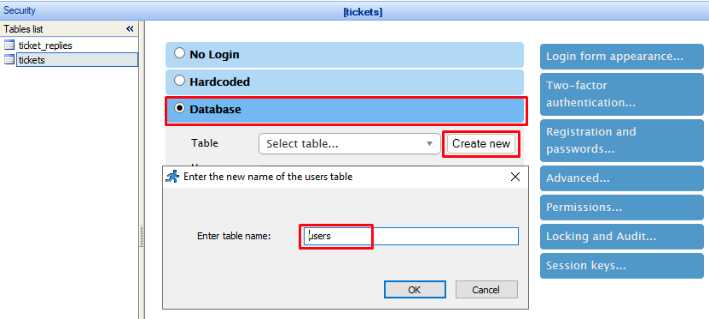
  2. Add new table “users” in “Security” tab.
  3. Set “Dynamic permissions” in “Security” tab. Add a new user.
  4. Build and run the PHPRunner project in localhost. Log in using the username and password added previously. Let the PHPRunner project open in localhost.
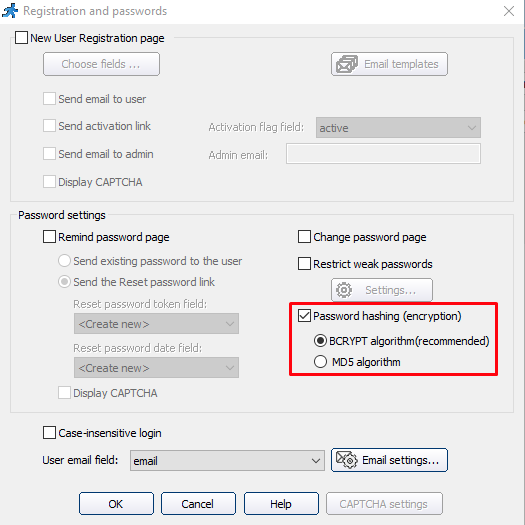
  5. Go to PHPRunner project again. Enable “Password hashing (encryption)” in “Registration and passwords…”.
  6. Build and run PHPRunner project again in localhost.
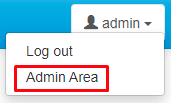
  7. Go to “Admin Area”.
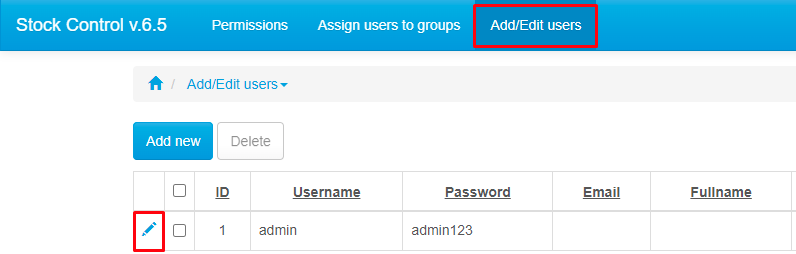
  8. Go to “Add/Edit users”, edit the password. To use back the same password, first change the password to another password. Save it and then edit it back to change to the original password.

USR-VCOM for MOBITEK S80 and MOBITEK Q25 Works in Windows 11
TEST OBJECTIVE TESTING METHODOLOGY TEST RESULT
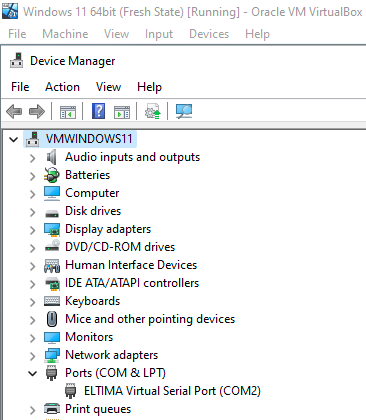
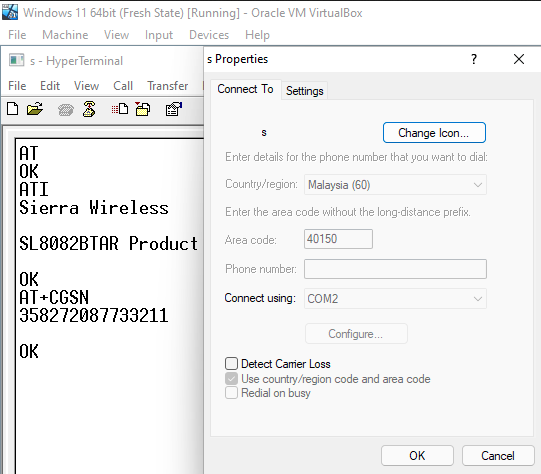
Does MOBITEK S80’s USR-VCOM (ELTIMA virtual serial port) support Windows 11?
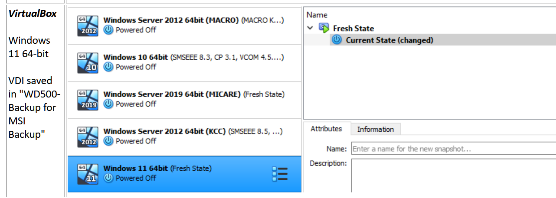
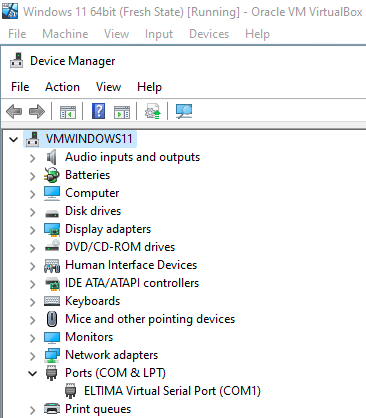
  1. Install  USR-VCOM in VM-Windows 11 :-
  2. Do “Hyper-Terminal” or “AT-OK” test.
USR-VCOM version = 3.7.1.520

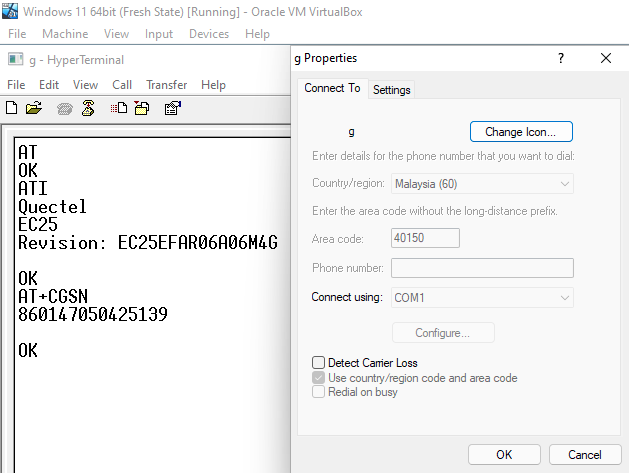
Does MOBITEK Q25’s USR-VCOM (ELTIMA virtual serial port) support Windows 11?
  1. Install  USR-VCOM in VM-Windows 11 :-

  2. Do “Hyper-Terminal” or “AT-OK” test.
USR-VCOM version = 3.7.1.520

Change Log of SMS360

v. 1.1 2024-01-03 Kaizen Completed

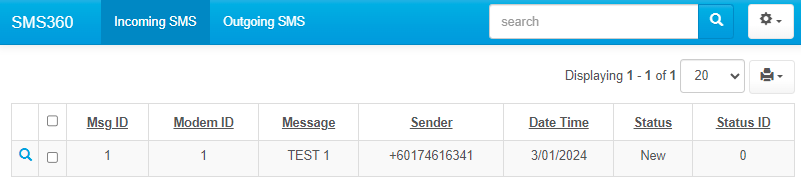
Add “Incoming SMS” tab

BEFORE AFTER
“Incoming SMS” tab that display ‘Inbox” table in grid format.

MODIFICATION in PHPRunner

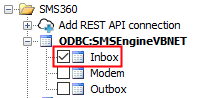
  1. Add new connection to “SMSEngineVBNET.mdb”
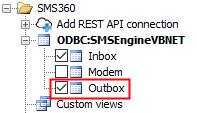
  2. Add “Inbox” table to the project.
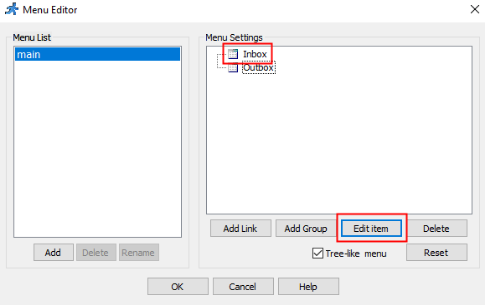
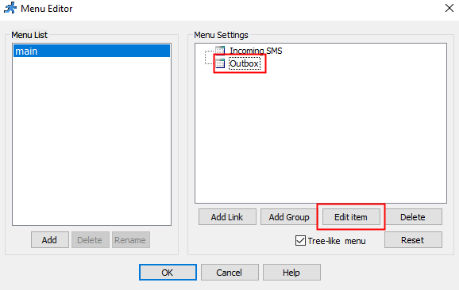
  3. Go to “Menu editor”. In “Menu Settings” section, select “Inbox” -> “Edit item”.
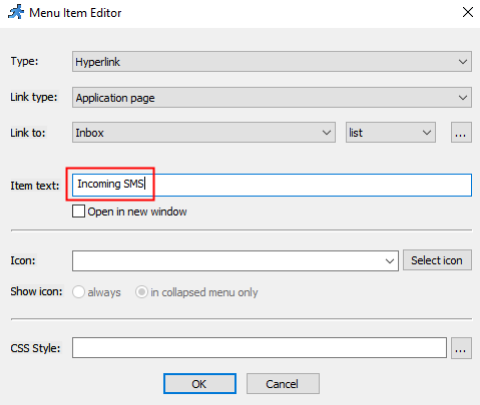
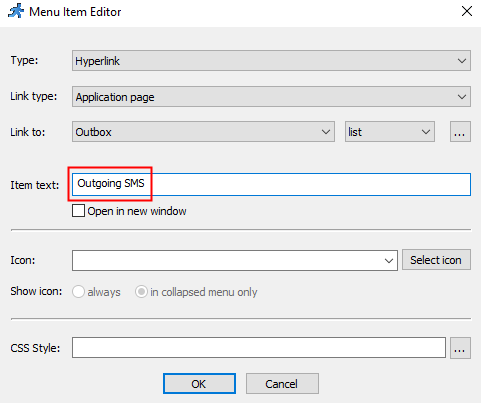
  4. In “Menu Item Editor”, rename the “Item text” to “Incoming SMS”.
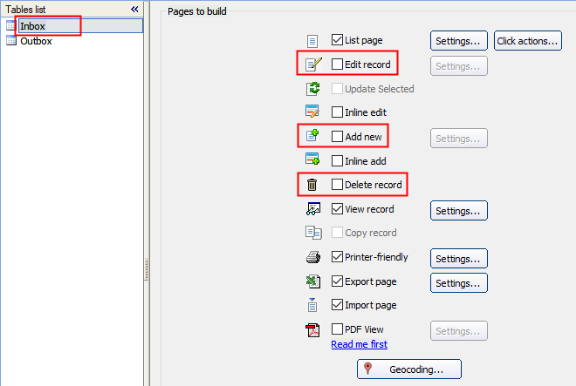
  5. Go to “Pages” tab. In Tables list, select “Inbox”. Uncheck “Edit record”, “Add new” and “Delete record”.
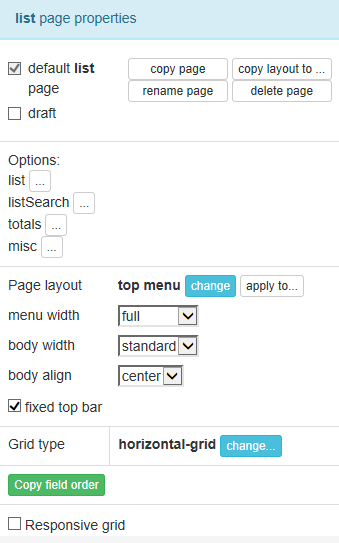
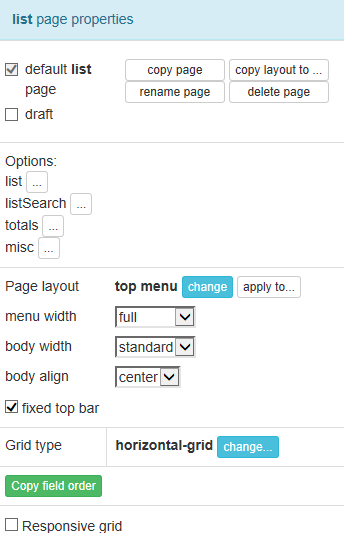
  6. Go to “Designer” tab, select “Inbox” in Tables list, set the page properties as below:


Add “Outgoing SMS” tab

BEFORE AFTER
“Outgoing SMS” tab that display “Outbox” table in grid format.

MODIFICATION in PHPRunner

  1. Add “Outbox” table to the project.
  2. Go to “Menu editor”. In “Menu Settings” section, select “Outbox” -> “Edit item”.
  3. In “Menu Item Editor”, rename the “Item text” to “Outgoing SMS”.
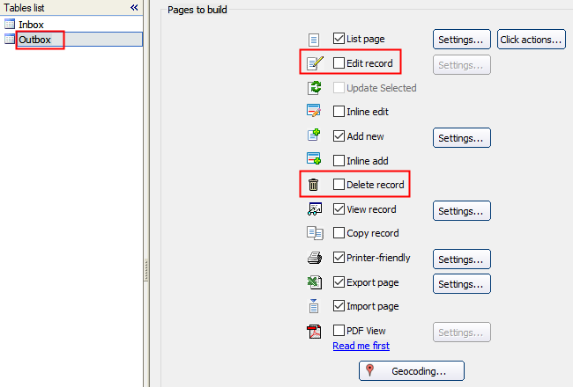
  4. Go to “Pages” tab. In Tables list, select “Outbox”. Uncheck “Edit record” and “Delete record”.
  5. Go to “Designer” tab, select “Outbox” in Tables list, set the “Page layout” as below:


Add button “Send SMS” into “Incoming SMS” tab

BEFORE AFTER
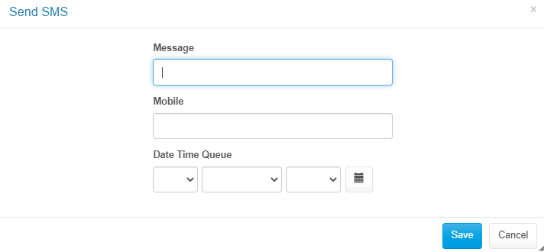
“Outgoing SMS” tab has a button “Send SMS” that insert a new record into “Outbox” table so that a SMS can be send out by SMS Engine — Basic Edition.

MODIFICATION in PHPRunner

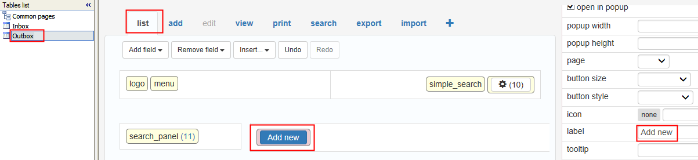
  1. Go to “Designer” tab. Select “Outbox” in Tables list. Click on “list” tab, click “Add new” button. Rename the text in “label” to “Send SMS”.
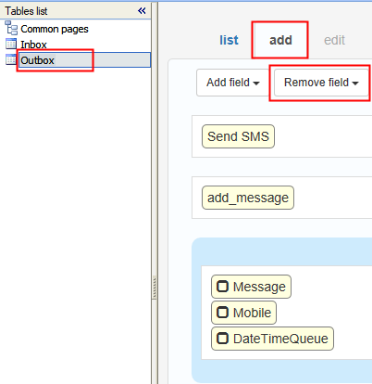
  2. In the same “Designer” tab, select “add” tab. Click “Remove field” dropdown and remove all fields except “Message”, “Recipient” and “DateTimeQueue”.


Add “http://localhost/sms360/v.1.1”

BEFORE AFTER
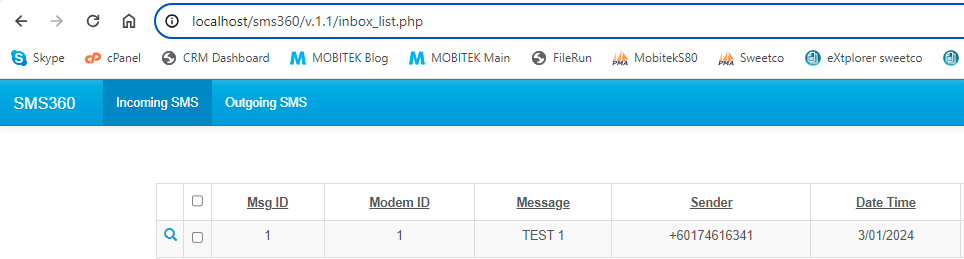
Localhost in HPC-8300 can access the PHP files on “http://localhost/sms360/v.1.1”

MODIFICATION in PHPRunner

  1. Open “..\output\connections\ConnectionManager.php”
  2. Go to the line “$data[“ODBCString”]” and change the value to:

    • “Provider=Microsoft.ACE.OLEDB.12.0;Data Source=C:\\Users\\mobitek1\\Desktop\\SMS360 v. 1.1\\SMSEngineVBNET.mdb;Persist Security Info=False;”;
    • “Data Source” is where the “SMSEngineVBNET.mdb” located.
    • Each directory must be separated by double backslash “\\”.
  3. Copy all files inside “output” folder to “C:\wamp64\www\sms360\v.1.1”


v. 1.1 2024-01-03 Beta Testing Completed

TEST OBJECTIVE: Can v.1.1 work with “SMSEngineVBNET.mdb”?

TESTING METHODOLOGY TEST RESULT
  1. Add “SMSEngineVBNET.mdb” in ODBC 64-bit
  2. Connect v.1.1 to “SMSEngineVBNET.mdb”
  3. Change the connection string for “$data[“ODBCString”]” in line 146 of “ConnectionManager.php” to:
    "Provider=Microsoft.ACE.OLEDB.12.0;Data Source=C:\\Users\\mobitek1\\Desktop\\SMS360 v. 1.1\\SMSEngineVBNET.mdb;Persist Security Info=False;";


TEST OBJECTIVE: Can v.1.1 run in localhost of HPC-8300 (http://localhost/sms360/v.1.1) ?

TESTING METHODOLOGY TEST RESULT
  1. Copy all files inside “output” folder to “C:\wamp64\www\sms360\v.1.1”
  2. Open “http://localhost/sms360/v.1.1” in browser


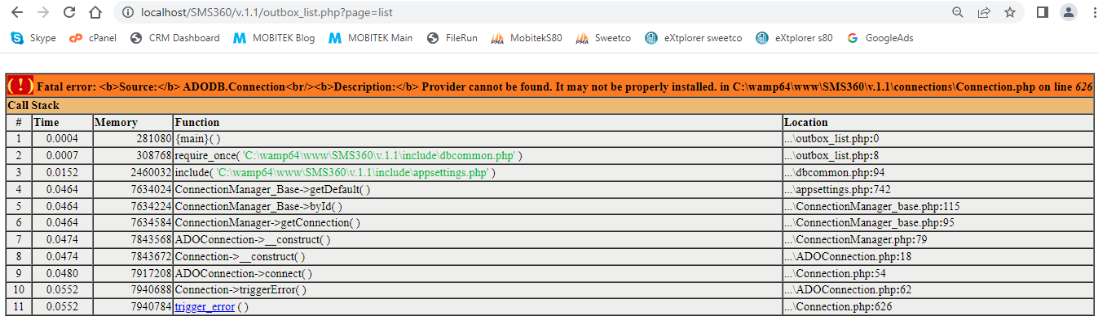
PROBLEM

SOLUTION SOLVED?
According to PHPRunner documentation, to use PHPRunner with Access database, we need to use 32-bit version
(source: https://xlinesoft.com/phprunner/docs/connecting_to_ms_access_db.htm)

Not tested
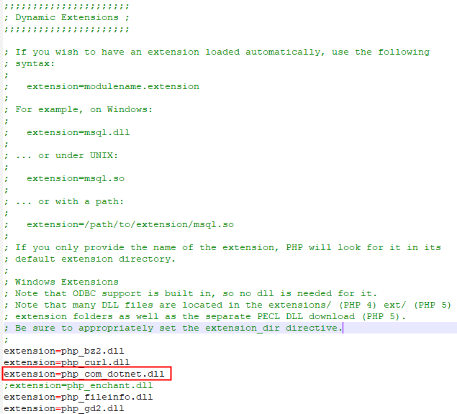
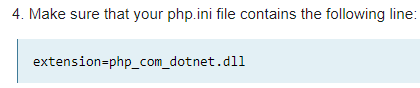
Enable “php_com_dotnet.dll” extension in “php.ini” file
(source: https://xlinesoft.com/phprunner/docs/connecting_to_ms_access_db.htm)
NO
Use ODBC in PHPRunner


refer to

NO. ODBC does not work.

“ADODB.Connection” problem has disappeared but new error thrown

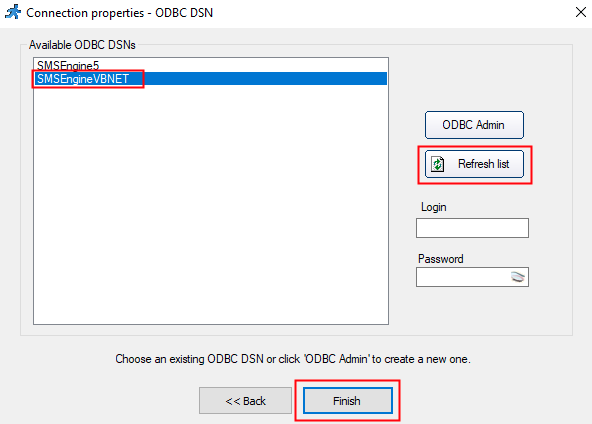
Steps to use ODBC in PHPRunner:

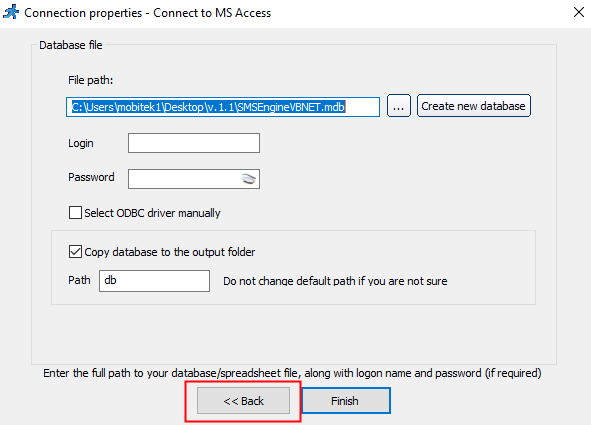
  1. In “Tables” tab, right-click on the database and select “Properties”
  2. In “Connection properties”, click on “Back” button
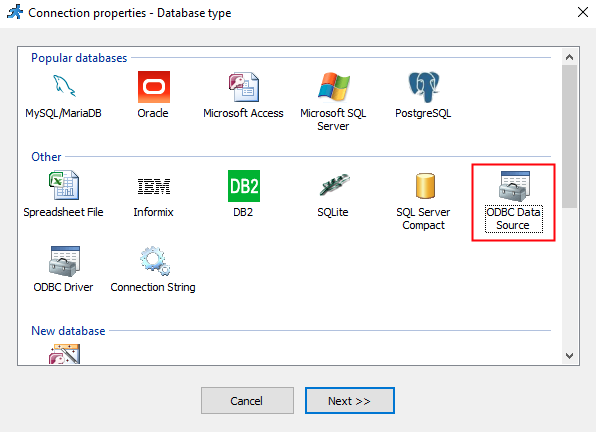
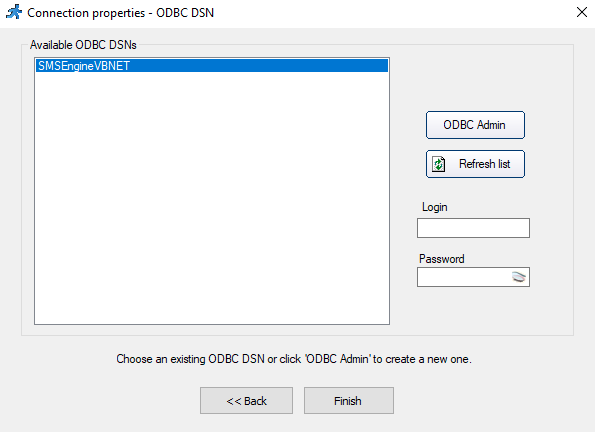
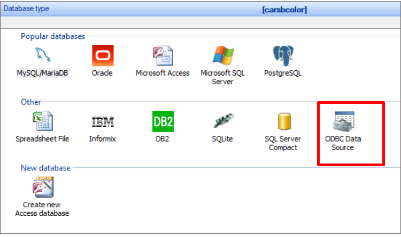
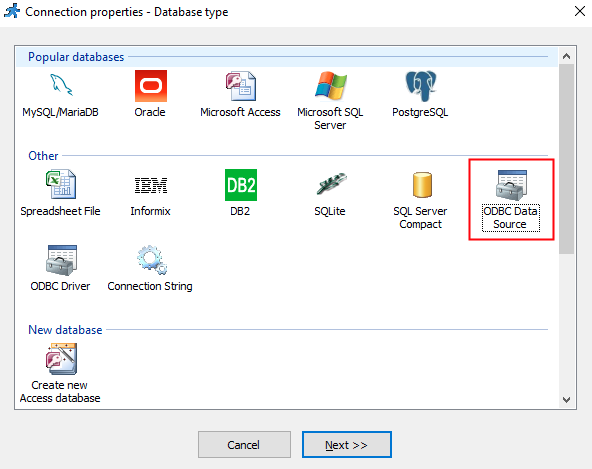
  3. Select “ODBC Data Source”
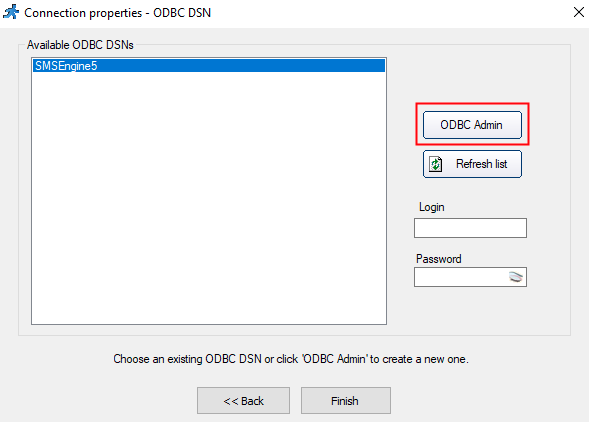
  4. Click “ODBC Admin” button
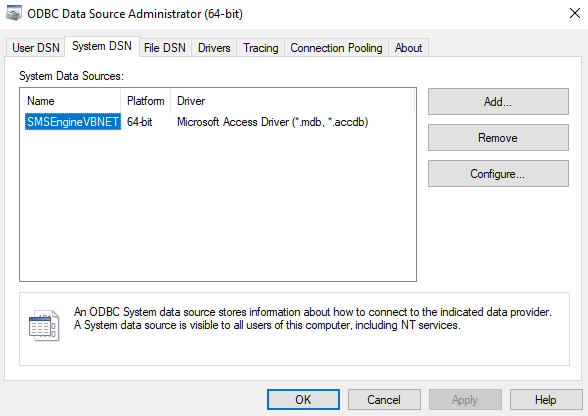
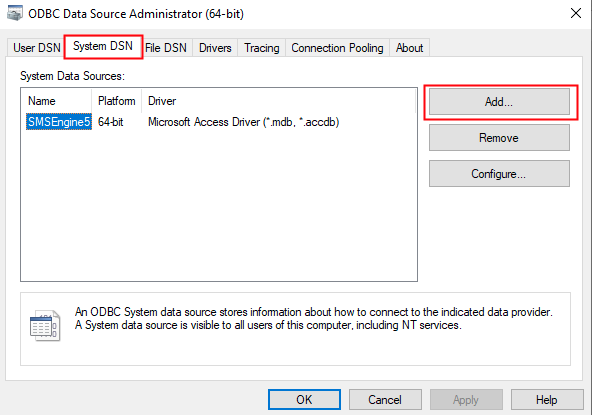
  5. Select “System DSN” and click “Add…” button
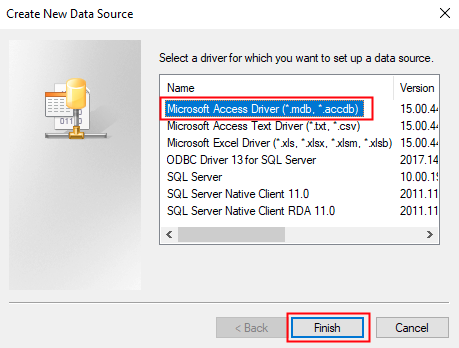
  6. Select “Microsoft Access Driver (*.mdb, *.accdb)”
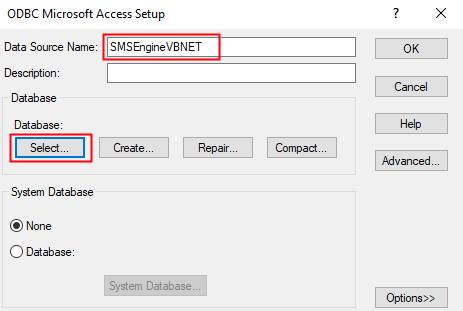
  7. Enter the “Data Source Name” and click “Select…”
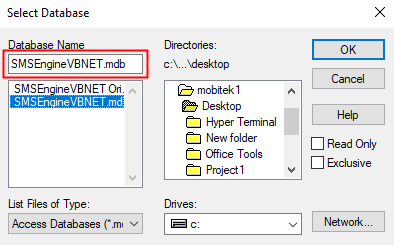
  8. Locate the location of the database
  9. Click “Refresh list” button, select the new “DSN” created and click “Finish”


It seems like PHPRunner still use Microsoft.Jet.OLEDB driver to connect to Access database which only work with 32-bit application as suggested by PHPRunner

The problem with Microsoft.Jet.OLEDB driver also discussed by others
(source: https://stackoverflow.com/questions/1991643/microsoft-jet-oledb-4-0-provider-is-not-registered-on-the-local-machine)


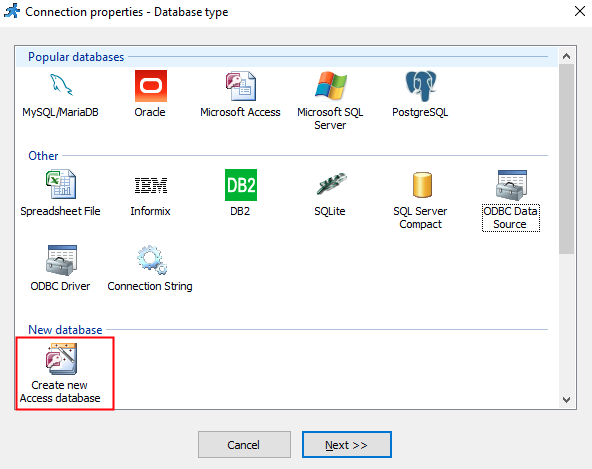
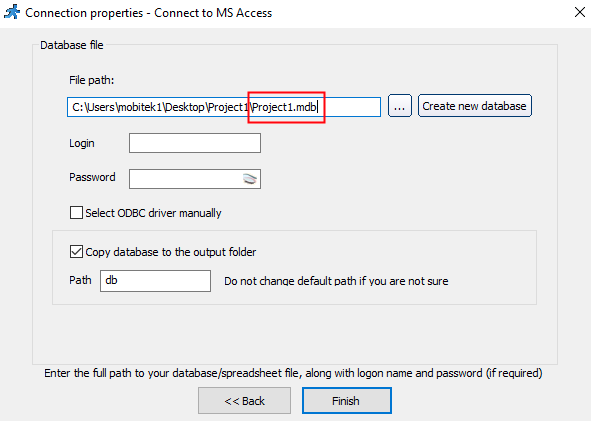
I’ve tried to create a new blank project using MS Access database in PHPRunner and also face the same problem:

  • connection properties
  • error thrown
    “Unrecognized database format ‘C:\Users\mobitek1\Desktop\Project1\output\db\Project1.mdb’. in C:\Users\mobitek1\Desktop\Project1\output\connections\Connection.php on line 626


The solutions to use Microsoft Access database in PHPRunner are:

  • use “Provider=Microsoft.ACE.OLEDB.12.0” in connection string (we don’t have control for this)
  • use “Microsoft Access Database Engine 2010 Redistributable” (not sure how it works)
    https://www.microsoft.com/en-us/download/details.aspx?id=13255
  • use 32-bit version of PHPRunner (as suggested by PHPRunner)
Edit the “ConnectionManager.php” to force it to use “Provider=Microsoft.ACE.OLEDB.12.0” instead of “Provider=Microsoft.Jet.OLEDB.4.0”


 YES

Overwrite “..\output\connections\ConnectionManager.php” in line 146 from:

Provider=Microsoft.Jet.OLEDB.4.0;DSN=SMSEngineVBNET;UID=;PWD=;Driver=C:\\PROGRA~1\\COMMON~1\\MICROS~1\\OFFICE15\\ACEODBC.DLL;DBQ=C:\\Users\\mobitek1\\Desktop\\SMS360 v. 1.1\\SMSEngineVBNET.mdb;DriverId=25;FIL=\”MS Access;\”;SafeTransactions=0″

to

Provider=Microsoft.ACE.OLEDB.12.0;Data Source=C:\\Users\\mobitek1\\Desktop\\Project1\\SMSEngineVBNET.mdb;Persist Security Info=False;